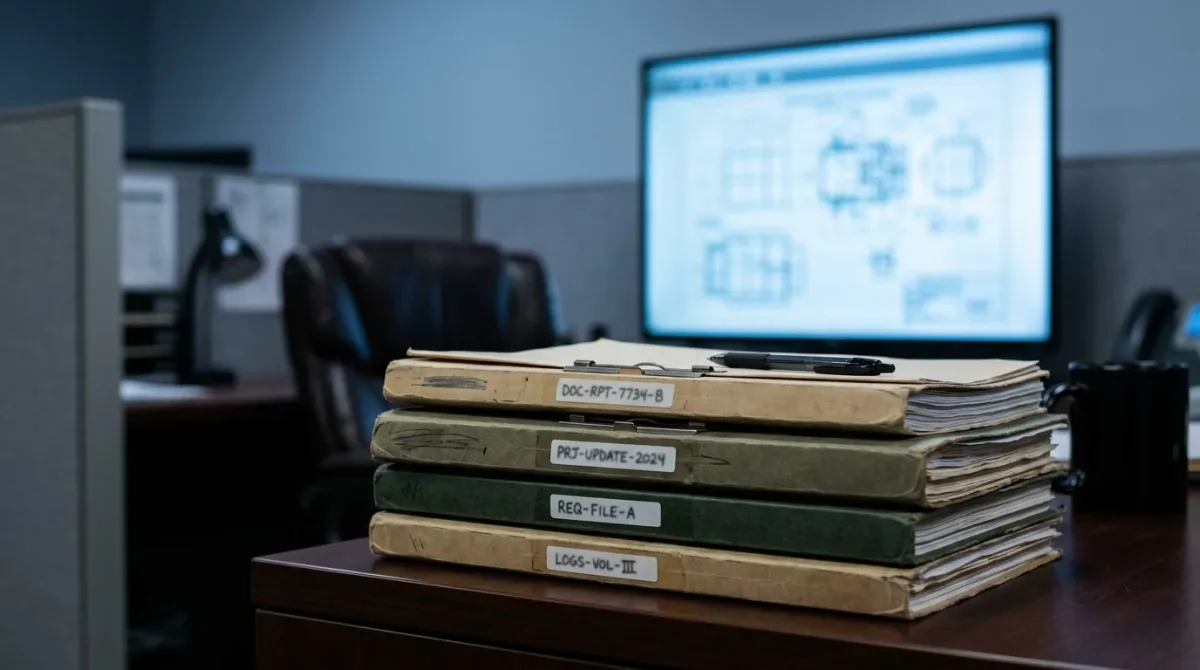
Foreign Military Sales is the U.S. government-to-government channel through which allied nations buy American weapons, and the whole system runs on a formal document chain rather than a single negotiation. According to the Defense Security Cooperation Agency's Security Assistance Management Manual, the process's own foundational guidance, a case begins with a Letter of Request and cannot move forward until that request is judged complete enough to price and staff. That single requirement, more than any political dispute, is what the Pentagon's own watchdog has identified as the main source of delay.
EDN News 12 is an independent online publication, not a broadcaster, and this explainer draws only on the agencies' published guidance, a U.S. Government Accountability Office review, and on-the-record congressional testimony.
What is Foreign Military Sales, and how does a request actually start?
FMS is not a storefront. A partner nation's Letter of Request, or LOR, must be "submitted and received through proper channels" and can arrive as a formal letter, an email, or a request-for-proposal-style document, per the Security Assistance Management Manual maintained by the Defense Security Cooperation Agency (DSCA). Before that formal submission, a partner can ask the U.S. government for informal help — DSCA's manual describes a pre-LOR phase in which the Security Cooperation Organization at the U.S. embassy helps the partner scope its requirement and plan an acquisition strategy.
Once a request lands, the responsible U.S. military department — the "Implementing Agency" in DSCA's terminology — sorts it into one of three states: insufficient, actionable, or complete. An insufficient request triggers a Request for Information back to the purchaser. That back-and-forth, DSCA's own manual makes clear, is a normal and expected part of the process, not an exception.
Why does simply defining the requirement take so long?
According to a 2017 Government Accountability Office review of the FMS program, "military department officials stated that the process for defining requirements is a significant challenge that affects expediency of FMS procurements." GAO found that many initial requests lacked enough detail to act on, and the resulting rounds of follow-up communication meaningfully extended timelines before a case had even been priced. GAO's assessment, an independent congressional watchdog analysis rather than a Pentagon claim, also found that ordinary acquisition friction — delayed contract awards, unexpected production problems, and federal budget uncertainty — layers on top of the requirements problem and slows FMS cases the same way it slows any other defense contract.
GAO's recommendation was procedural rather than sweeping: it told the Department of Defense to issue department-wide guidance pushing program offices to give FMS customers checklists that spell out exactly what information a request needs. DOD agreed, and GAO's own account of the follow-up shows how slowly even an agreed fix moves — DSCA issued guidance in April 2018 requiring the military departments to build system-specific checklists, with a target completion date of July 2023 for all major defense articles, a five-year implementation window for a single administrative tool.
What happens once a request is judged complete?
Only after a request reaches "LOR Complete" status, per the Security Assistance Management Manual, can the Implementing Agency build a Letter of Offer and Acceptance, or LOA — the priced, formal offer the partner nation ultimately signs. Sales of Major Defense Equipment above statutory dollar thresholds must also clear Congressional Notification under Section 36(b) of the Arms Export Control Act before that offer becomes final, a step DSCA's manual pairs with a Country Team Assessment laying out the strategic rationale for the sale. Only once the partner accepts the completed LOA does what DSCA calls "case implementation and execution" begin — the phase where the actual contracting, production, and delivery happen.
Every one of those stages is sequential, not parallel. A case cannot reach Congressional Notification before it reaches LOR Complete, and it cannot reach implementation before the partner signs. That structure is precisely what critics have started to target.
Where does the process actually bottleneck, in practice?
Gen. Michael Kurilla, then commander of U.S. Central Command, told Congress the FMS system needs a complete overhaul, framing the delay as a strategic liability: partner nations have real defense needs, and if Washington cannot meet them promptly, competitors — he named China — will, according to his testimony as reported by Breaking Defense. Kurilla described the system as running through four institutional "levers" that each add their own delay, and he was specific about where the worst of it sits.
| Lever | Role in the process | Kurilla's characterization, per Breaking Defense |
|---|---|---|
| Pentagon | Internal negotiation and case development | Negotiations alone can consume up to a year |
| State Department | Policy and Congressional Notification review | Generally moves quickly, in his account |
| Congress | Statutory notification window, can hold a sale | Can delay a sale but is not the main chokepoint he described |
| Defense industrial base | Contracting and actual production | Described as the most significant bottleneck of the four |
Kurilla's most concrete illustration was a production-capacity problem, not a paperwork one: he described telling partner nations that a system they want now will not be available until 2029, purely because industry lacks the capacity to build it faster — a gap he said is corrosive to the relationships FMS is supposed to build. His proposed fix was to give manufacturers longer-term contracts so they have the confidence to invest in expanding production lines, reducing the financial risk they carry for capacity they might not otherwise need. That is a production-economics argument, not a bureaucratic one, and it is worth separating from the requirements-definition problem GAO identified — the two bottlenecks compound each other but are not the same problem.
Has anyone actually fixed this?
Kurilla's own testimony, as reported by Breaking Defense, includes a caution against assuming reform is straightforward: he said prior attempts have failed, describing "dozens of task forces" that have examined the FMS process without producing meaningful change, and argued that a comprehensive restart — not another incremental fix — is what the system actually needs. Publicly available sources reviewed for this piece do not establish which, if any, of the reform proposals now circulating in Washington have been formally adopted; that is a live policy question EDN News 12 will continue to track rather than a settled outcome.
The engagement chain, step by step
- Pre-LOR scoping. The partner nation, often with informal help from the U.S. embassy's Security Cooperation Organization, defines what it wants to buy and how.
- Letter of Request. The partner formally submits the LOR; the U.S. military department sorts it as insufficient, actionable, or complete, per DSCA's manual.
- Requirements back-and-forth. If information is missing, the department sends Requests for Information — the step GAO identified as the single biggest source of delay.
- Letter of Offer and Acceptance. Once the LOR is complete, the department prices the case and drafts the LOA.
- Congressional Notification. Major Defense Equipment sales above statutory thresholds go to Congress under AECA Section 36(b) before the offer can be finalized.
- Case implementation. After the partner signs the LOA, contracting, production, and delivery begin — the phase where industrial capacity, not paperwork, tends to set the pace.
Put together, the mechanism explains why a sale can be politically uncontroversial and still take years: the delay GAO documented sits at step three, before a dollar figure even exists, and the delay Kurilla described sits at step six, after every approval has already been granted. Fixing one does not fix the other. That is the whole trade facing anyone who wants to make FMS faster.
For a related defense news perspective, read Saudi Arabia's $9 billion Patriot missile deal explains how the Pentagon actually sells weapons abroad.
For more context, read The Complete Guide to Gaming Genres.
For more context, read Federal Permitting: The Backlog Now Has an Owner and a Clock.
For more context, read How RFID Tags Track a Garment From Warehouse to Sales Floor.