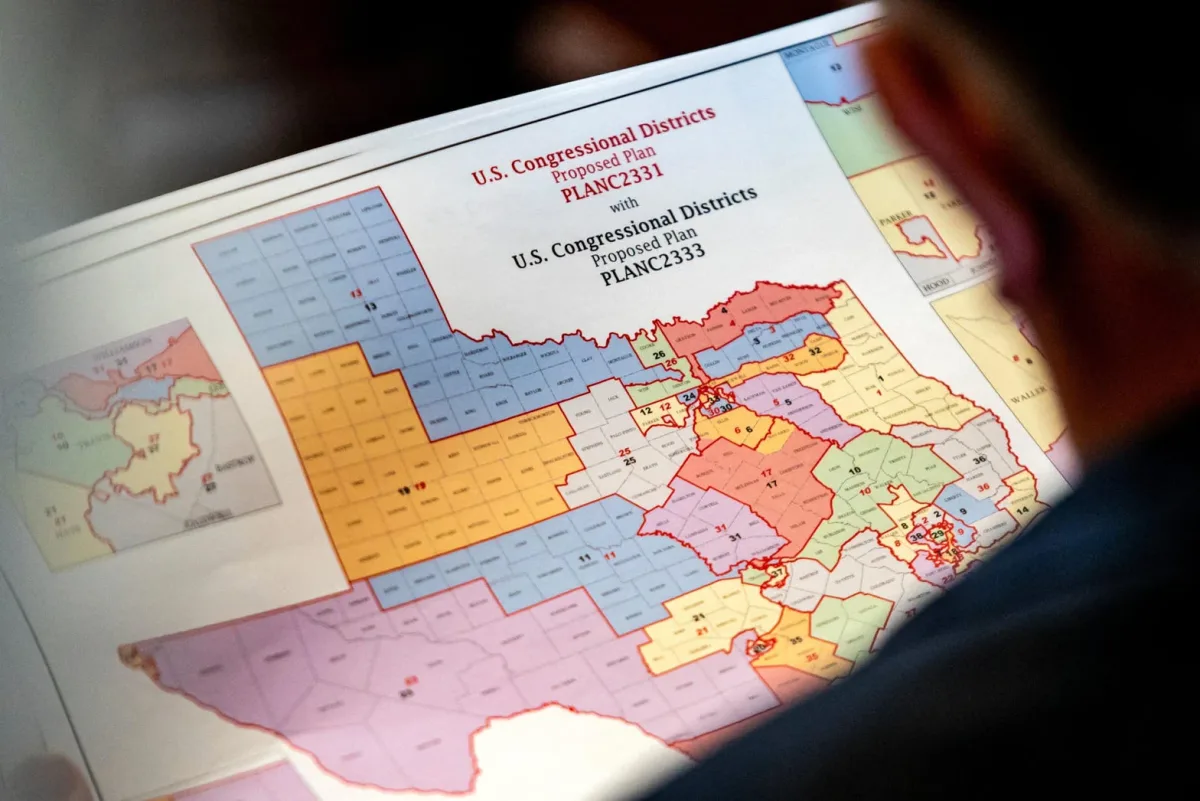
Every ten years, and sometimes in between, states redraw the lines of their U.S. House districts to reflect new population counts. The Constitution assigns that job to "the Legislature" of each state, but a growing number of states have moved the pen from lawmakers to independent or bipartisan commissions, a shift the Supreme Court upheld in 2015.
Who has the constitutional authority to draw the lines?
Article I, Section 4 of the Constitution, known as the Elections Clause, states that the "Times, Places and Manner of holding Elections for Senators and Representatives, shall be prescribed in each State by the Legislature thereof," while Congress "may at any time by Law make or alter such Regulations," according to the Constitution Annotated published by the Library of Congress. That text is the starting point for every redistricting fight: it gives state legislatures the first word on how House elections are structured, including where district lines fall, but leaves Congress a standing power to override state rules by statute.
Why do some states use commissions instead of legislatures?
Most states still leave congressional redistricting entirely to their legislatures. But 18 states have shifted some or all of that authority to a commission, according to the National Conference of State Legislatures, which tracks state redistricting structures. NCSL groups those commissions into three categories. Ten states give a commission primary responsibility for drawing congressional maps outright, including Arizona, California, Colorado, Michigan and Washington. Four states — Maine, New Mexico, New York and Utah — use advisory commissions that submit plans to the legislature, which can accept, reject or, in New York's case, amend a plan after rejecting it twice. Three states — Connecticut, Indiana and Ohio — use a commission only as a backup if the legislature misses its deadline or cannot reach the bipartisan agreement its process requires.
How are commission members chosen?
Selection methods vary by state and are spelled out in each state's constitution or statutes. Arizona's Independent Redistricting Commission is a five-member panel in which "no more than two can be registered members of the same political party," according to the Arizona Secretary of State's office. Party leaders in the Arizona House and Senate each select one commissioner from their party, and those four members then choose a fifth, unaffiliated member to chair the panel. California's commission has 14 members — five Democrats, five Republicans and four unaffiliated voters — selected through a lottery drawn from a pool of qualified applicants, per NCSL. Colorado's 12-member commission uses retired judges to randomly select applicants with an eye toward geographic and partisan balance, while Washington's five-member commission has legislative leaders each appoint one registered voter, plus a nonvoting chair chosen by the four appointees.
Does using a commission guarantee less partisan maps?
Not automatically. "Reformers often mistakenly assume that commissions will be less partisan than legislatures when conducting redistricting but that depends largely on the design of the board or commission," NCSL notes. A commission with members chosen directly by party leaders can still produce maps that favor one party, while a legislature operating under strict statutory criteria can produce more competitive districts. The structural difference commissions offer is mainly procedural: they remove the direct incentive for sitting lawmakers to draw their own districts, but the partisan makeup of the commission itself still shapes the outcome.
Is a voter-created commission even constitutional?
Arizona voters created the state's Independent Redistricting Commission by ballot initiative in 2000, prompting a legal challenge from the Arizona Legislature, which argued that the Elections Clause's reference to "the Legislature" meant only the elected legislative body could draw congressional districts. The Supreme Court rejected that argument in Arizona State Legislature v. Arizona Independent Redistricting Commission, ruling 6-3 in 2015 that "the Legislature" in the Elections Clause encompasses whatever lawmaking process a state's own constitution authorizes, including a commission created by voter initiative, according to the Court's opinion summarized by Cornell Law School's Legal Information Institute. Chief Justice John Roberts dissented, joined by Justices Antonin Scalia, Clarence Thomas and Samuel Alito, arguing the clause requires the elected legislative body itself to act. The majority opinion, written by Justice Ruth Bader Ginsburg, found the Elections Clause was designed to prevent Congress from entrenching itself in office, not to bar states from assigning redistricting to a body voters created for that purpose.
What happens after a map is drawn?
Once a commission or legislature certifies new congressional and legislative district maps, they generally take effect for the next election cycle unless a separate lawsuit challenges them on other grounds, such as a state or federal voting-rights claim. In Arizona, the Independent Redistricting Commission's maps take effect immediately upon approval and are used in the following election, according to the Secretary of State's office. The 2015 Supreme Court ruling settled the basic question of whether commissions may exist at all; it did not resolve separate disputes over whether any individual map dilutes the voting power of a particular group or party, which continue to be litigated on other constitutional and statutory grounds.
For a related business news perspective, read How Tariffs Work And Who Actually Pays Them.
For more context, read The Complete Guide to Gaming Genres.
For more context, read National Popular Vote Compact Divides State Legislatures.
For more context, read The federal noncompete ban is dead. State law never was..