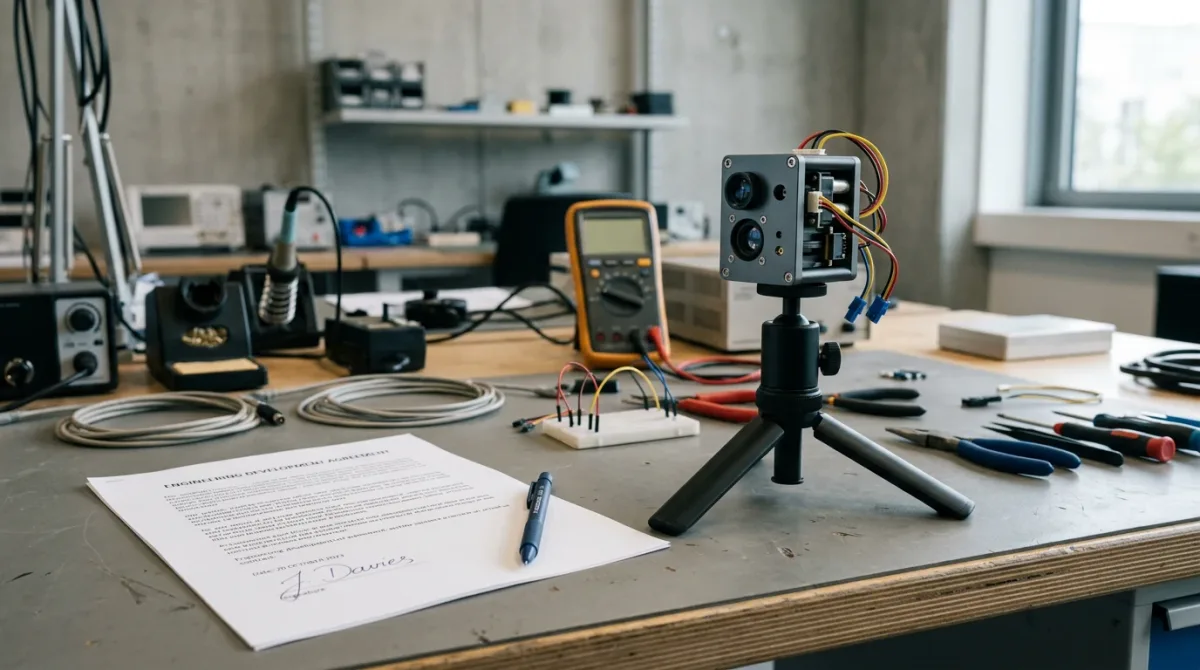
An Other Transaction Agreement (OTA) is a legally binding award the Department of Defense can use instead of a standard federal contract, exempting the deal from most procurement statutes under 10 U.S.C. §§2371 and 2371b. New prototype OTAs grew from 12 awards in fiscal 2013 to 94 in fiscal 2017, a 650 percent increase, according to a Congressional Research Service analysis of the authority.
What Exactly Is an Other Transaction Agreement?
An OTA is not a contract, a grant, or a cooperative agreement in the legal sense used elsewhere in government. It is a separate category of award that Congress carved out specifically so the Pentagon could negotiate terms — intellectual property rights, payment schedules, termination clauses, cost accounting standards — without being bound by the Federal Acquisition Regulation (FAR), the rulebook that governs most federal purchasing, according to the Congressional Research Service report on the authority.
The point is speed and access. Traditional FAR contracts carry audit, disclosure, and certification requirements that many commercial technology firms will not accept. An OTA lets a program office write a shorter, negotiated agreement instead, which the Defense Innovation Unit says allows it to "move in months" and award prototype deals "in as few as 60 to 90 days," per the unit's own description of its process.
The research version of the authority is the older of the two and traces back decades, originally aimed at letting DoD work with universities and commercial research firms that would not sign a standard federal contract. The prototype version is the one now driving most of the growth described below, and it is the version most often cited in coverage of individual defense-technology awards.
What Law Actually Authorizes This?
Two statutes do the work. 10 U.S.C. §2371 covers basic, applied, and advanced research agreements. 10 U.S.C. §2371b, added later, covers prototype projects and the follow-on production that can come after a successful prototype, according to the Congressional Research Service report. Neither statute is new — the research authority dates to the 1990s — but the prototype authority is the one driving most of the growth in recent budget cycles.
Because OTAs sit outside the FAR, they are also outside the normal bid-protest process available to contractors who lose a FAR-based competition, a distinction the Congressional Research Service report flags as one of the authority's most consequential features for industry.
How Big Can an OTA Get Before It Needs Sign-Off?
Dollar thresholds trigger escalating review. A prototype OTA valued between $20 million and $100 million needs approval from the relevant service's senior procurement executive; above $100 million, it needs sign-off from the Under Secretary of Defense for Acquisition and Sustainment, per the Congressional Research Service report. Agreements over $5 million must also give the Government Accountability Office (GAO) access to records and personnel for audit purposes.
| Threshold | Requirement |
|---|---|
| Above $5 million | GAO must be granted audit access to records and personnel |
| $20 million–$100 million | Approval by the service's senior procurement executive |
| Above $100 million | Approval by the Under Secretary of Defense for Acquisition and Sustainment |
Those figures come from the Congressional Research Service's 2019 review of the authority; program offices should confirm current thresholds against the latest statute and DoD guidance, since Congress has amended acquisition law in subsequent National Defense Authorization Acts.
Why Has Prototype OTA Use Grown So Fast?
DoD obligated $2.1 billion on prototype OTAs in fiscal 2017 — still under 1 percent of total department contract obligations that year, but a sharp climb from a near-zero base a few years earlier, according to the Congressional Research Service. About 89 percent of new prototype OTAs awarded between fiscal 2013 and fiscal 2017 were competed "to the maximum extent practicable," the same report found, pushing back on the assumption that OTAs are mostly sole-source deals.
A separate GAO review of the authority, published November 22, 2019, found that companies without a prior history of DoD contracts — so-called nontraditional defense contractors — participated in 88 percent of the prototype transactions GAO examined from fiscal 2016 through fiscal 2018. The Army awarded the most transactions of any service during that period, in some cases acting on behalf of other DoD components, per GAO.
Can a Prototype OTA Turn Into a Production Contract?
Yes, under specific conditions. Section 2371b allows a program to move directly into follow-on production without a new competition, but only if the underlying prototype agreement was itself competitively awarded and successfully completed, according to the Congressional Research Service. That provision is what makes the prototype OTA attractive as an on-ramp: a company that wins and delivers a prototype can, in effect, convert that award into a production relationship without going back through a full FAR-based source selection.
What Oversight Problems Has GAO Found?
GAO's 2019 review examined 11 prototype transactions in detail and found that two had not received the pre-award review required by DoD policy — a Defense Advanced Research Projects Agency transaction valued at $7.8 million and an Army Contracting Command-New Jersey transaction totaling $10 million, per GAO-20-84. Agency officials subsequently reviewed both transactions and told GAO they found no substantive issues with the awards themselves.
GAO did not issue formal recommendations in that report. Instead, it noted that senior contracting officials had committed to conducting internal file reviews to check compliance with review policy and to clarifying guidance on when higher-level review is required, according to the report. The finding illustrates a recurring tension around OTAs: the same flexibility that lets program offices move fast also means fewer of the standardized checkpoints built into FAR contracting, and it is a tension oversight bodies are likely to keep revisiting as obligations under the authority continue to grow year over year.
What Should Industry and Program Watchers Track?
Three things worth monitoring, all sourced to the same body of oversight work: whether a given prototype OTA was competed or sole-sourced, since only competed-and-completed prototypes qualify for follow-on production under Section 2371b; whether the award falls above the $20 million or $100 million review thresholds, which determines how much senior-level sign-off it required; and whether the awarding office is one with a track record of nontraditional-contractor participation, since GAO's data ties that participation rate to how the tool has actually been used rather than just how it is authorized. The Department of Defense has not published updated department-wide dollar totals for prototype OTA obligations more recent than the fiscal 2017 figure cited in the Congressional Research Service's report; more current totals, if the department has released them, are not part of this source set.
Frequently Asked Questions
Is an OTA the same thing as a grant?
No. A grant funds a recipient to pursue a public purpose with government money; an OTA is a negotiated agreement for a specific research or prototype outcome and can include cost-sharing and IP terms a grant would not, per the Congressional Research Service's description of the authority.
Can a losing bidder protest an OTA award?
Generally not through the standard bid-protest process available for FAR-based contracts, since OTAs sit outside the Federal Acquisition Regulation, according to the Congressional Research Service report.
Which DoD component uses OTAs the most?
The Army awarded the most prototype OTA transactions of the transactions GAO examined for fiscal 2016 through fiscal 2018, sometimes acting on behalf of other DoD components, per GAO-20-84.
Does every prototype OTA need Pentagon-level approval?
No. Only agreements above $20 million require senior procurement executive sign-off, and only those above $100 million require approval from the Under Secretary of Defense for Acquisition and Sustainment, according to the Congressional Research Service report.
For a related industry perspective, read How Other Transaction Agreements Work, and Why DoD Obligated $18 Billion in FY24.
For more context, read The Complete Guide to Gaming Genres.
For more context, read AI detectors don't prove a student used AI to cheat.
For more context, read Federal Permitting: The Backlog Now Has an Owner and a Clock.