Section 2 of the Voting Rights Act still bans voting practices that deny or abridge the right to vote on account of race, but its reach has narrowed sharply: on April 29, 2026, the Supreme Court ruled 6-3 in Louisiana v. Callais that Louisiana's map with a second majority-Black district had to fall, and that Section 2 liability requires evidence supporting a strong inference that the state intentionally drew its map on the basis of race. The Gingles framework from 1986 remains the vehicle, but its key step — allowing districts to remedy minority vote dilution without proving intent — no longer does the work it did.
USA Daily News 24 is an online publication, not a law firm, and it publishes information, not legal advice. Redistricting disputes are case-specific; parties should rely on counsel and on the controlling decisions of their own circuit.
What does Section 2 actually prohibit?
The section, codified at 52 U.S.C. Section 10301, forbids any voting standard, practice, or procedure that results in a denial or abridgment of the right to vote on account of race or color. Since the Supreme Court's 1980 decision in City of Mobile v. Bolden, a result has to be shown — not just a discriminatory purpose. Congress amended the statute in 1982 to confirm that plaintiffs need not prove intent, and the resulting test, built out in Thornburg v. Gingles in 1986, asked whether a minority group could show compactness, political cohesion, and bloc voting by the majority, after which courts weighed the Senate report's totality factors to decide whether the group's electoral opportunity was diluted.
What did Callais change?
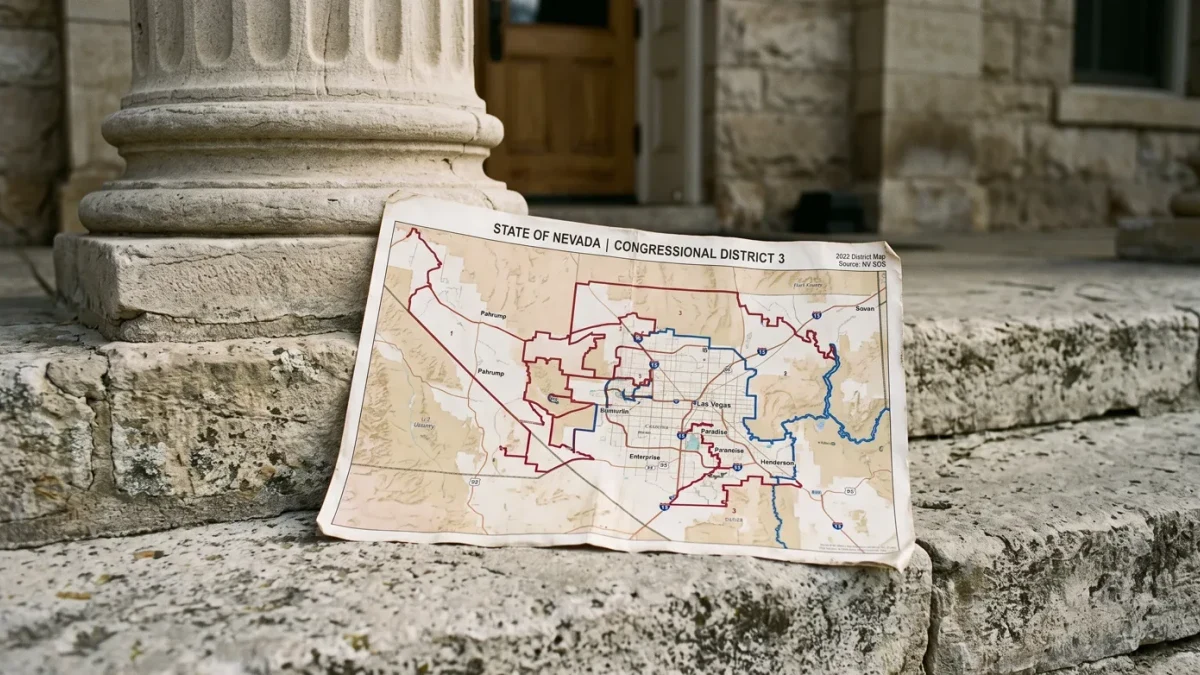
The case arose after Louisiana, under court pressure following a 2022 Section 2 loss, redrew its six congressional districts to create a second majority-Black district. Non-African American voters challenged the new map as a racial gerrymander. The Supreme Court heard argument in March 2025, re-argued the case in October 2025, and on April 29, 2026 struck the map down, holding that Section 2 does not require race-conscious districting absent evidence supporting a strong inference of intentional race-based drawing, and that remedying potential vote dilution was not a compelling interest that justified classifying voters by race. Justices across prior majorities, including in Allen v. Milligan in 2023, had accepted remedial districting as constitutional; the new majority rejected that premise outright. The practical effect: the Gingles preconditions remain a screening tool, but proving dilution now requires intent evidence that the 1982 amendment was designed to make unnecessary. Congressional Research Service analysis issued after the decision describes it as the most significant narrowing of the statute since Shelby County v. Holder in 2013 gutted Section 5's preclearance regime.
What survives from the earlier framework?
More than nothing, and the distinctions matter:
- Vote denial claims. Challenges to practices that make voting itself harder for minority voters — polling place closures that concentrate burden, discriminatory purges — proceed as before, and Callais addressed districting, not election administration.
- Coalition and influence claims. Suits by groups too small to constitute a majority of a district, which never fit Gingles cleanly, are largely cut off where they relied on the remedial logic Callais rejected.
- Intent-based racial gerrymandering claims. Claims that a map classifies voters by race can proceed under the Equal Protection Clause, but plaintiffs now face a Supreme Court majority skeptical of both race-based remedies and intent findings from circumstantial evidence.
- State-law protections. State constitutions and statutes — in states including New York, Michigan, and Virginia — remain independent sources of protection, and litigation is migrating there.
- Coalition districts under state rules. Several state redistricting commissions and courts continue to draw minority-opportunity districts as a matter of state policy, insulated from the federal analysis Callais displaced.
What happens to maps drawn under old court orders?
The decision's fallout lands first on existing decrees. Districts in states including Alabama, Georgia, Louisiana, and Texas were drawn or redrawn in 2022-2024 to comply with Section 2 rulings or settlements, and challenges to several were pending when Callais issued. Defendants now argue those remedial districts rest on the rejected premise; defenders answer that final judgments and intervening elections complicate unwinding them, and that some records already contain the kind of circumstantial intent evidence Callais demands. Expect a wave of motions to reopen, with the Fifth Circuit — the forum for most map litigation — setting the early pace, and with the Supreme Court likely to clarify how cleanly the new rule applies to judgments that became final before April 2026.
What did the dissent argue?
The three dissenters, in an opinion by Justice Elena Kagan, argued that the ruling upends settled law mid-cycle, and further argued that the majority converted a results test Congress wrote deliberately in 1982 into an intent test the statute was amended to reject, and that decades of precedent from cases including Allen v. Milligan in 2023 — where the Court had affirmed a Section 2 ruling requiring an additional Black opportunity district in Alabama — had treated remedial districting as consistent with equal protection. The dissent's practical point is the litigation roadmap: lower-court records now get built with circumstantial intent evidence, map-drawing sequences, and expert analysis of alternative maps.
What does this change going forward?
As of mid-2026 the redistricting map is in transition. States that drew majority-minority districts under Section 2 consent decrees or court orders face challenges; the Justice Department's enforcement posture under the new rule is uncertain; and the 2026 and 2028 cycles will be the first drawn under a regime where vote dilution claims must clear an intent bar. The one stable prediction the decisions support: the action moves from the Gingles checklist to the record — who drew the map, when, with what data, and on whose instructions. Section 2 still stands on the books; what changed is the proof it takes to use it. The statute's 60-year arc — from results test, to preclearance, to intent evidence — is a case study in how a civil rights law's protection narrows one ruling at a time.