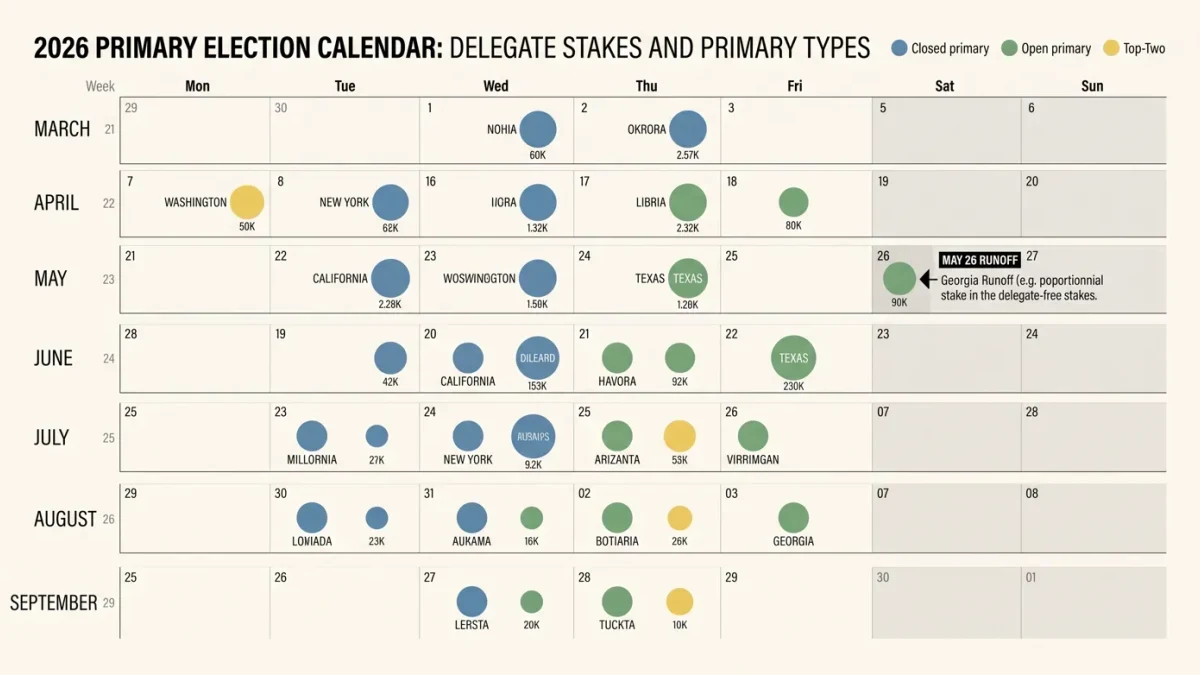
Primary dates are set by two different authorities with two different tools: state legislatures fix primary election dates by statute, while national and state parties set the rules for caucuses, which they run themselves, and impose their own windows and penalties on when delegates can be won. The result is a calendar negotiated every cycle between fifty legislatures and two national parties — and one state, New Hampshire, whose statute RSA 653:9 directs the secretary of state to schedule its primary at least seven days before any other similar contest, giving a single unelected official a veto-like grip on the early calendar. For 2026 midterms the stakes are municipal and state offices; the presidential order resets next for 2028.
What can a legislature control?
Everything the state pays for. A state-run primary is a government election: the legislature sets its date, whether it is open to all voters or closed to party members, whether unaffiliated voters may participate, and how runoff elections work if no candidate wins a majority. Those statutes sit in each state's election code, and changing the date is an ordinary act of legislation — which is why primary dates move for pedestrian reasons, such as saving money by merging a presidential primary with an existing local election day, or complying with federal law. The Uniformed and Overseas Citizens Absentee Voting Act requires ballots for military and overseas voters to be sent at least 45 days before a federal election, and it quietly shapes the calendar: a late state convention or slow recount can push a primary into violation, giving legislatures a hard administrative floor under the politics.
What do the parties control?
The delegate rules, and through them the real leverage. Each national party writes delegate-selection rules between conventions that bind how states choose convention delegates: windows for when contests may be held, proportional allocation requirements, and penalties — typically a loss of delegates — for states that vote early. Caucuses are the extreme case of party control: they are party meetings, run under party rules with party resources, and their dates can shift with a state party's decision alone. Iowa's first-in-the-nation caucuses are a party product, not a statutory primary, which is exactly why the Democratic National Committee could strip Iowa's early position for 2024 — moving South Carolina to the front of its calendar — without any legislature acting. The Republican National Committee kept its own long-standing rules for 2024, penalizing states that jumped its window, and its rules committee has been revising the sequence for the 2028 cycle.
Why does New Hampshire come first?
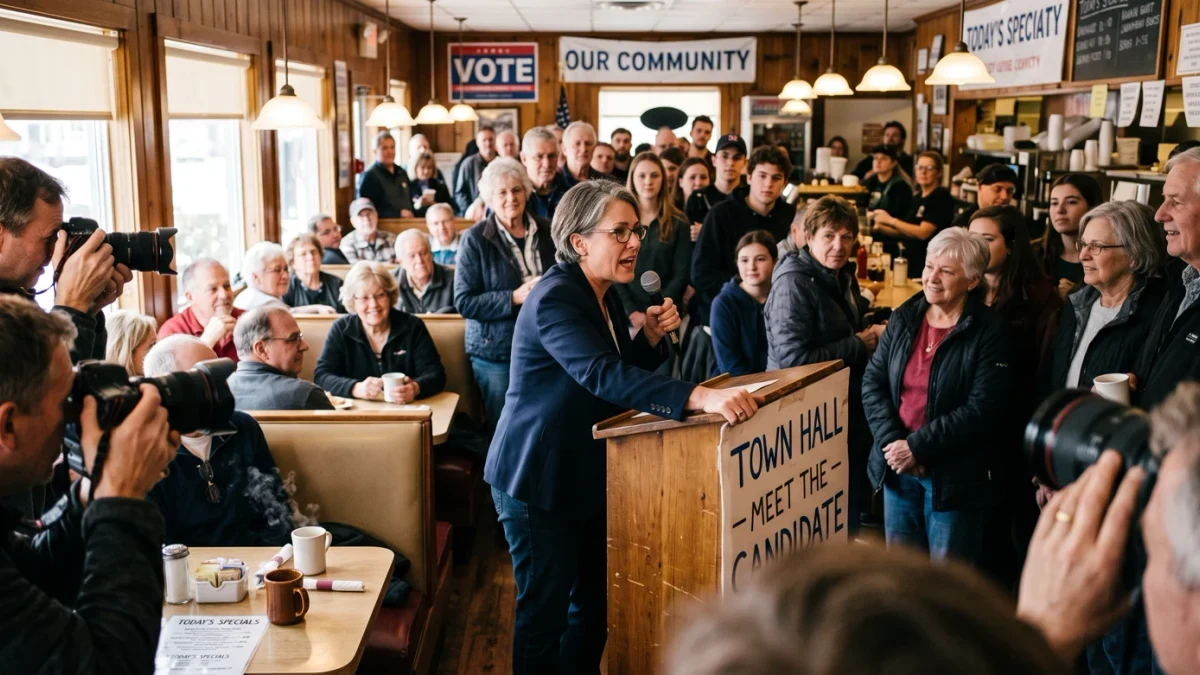
Because a state statute says so, and it has teeth. New Hampshire law RSA 653:9 directs the secretary of state to fix the presidential primary date at least seven days before any comparable contest — a similar primary, though historically not a caucus — and successive secretaries of state have treated the mandate as binding, moving the date earlier whenever another state encroaches. The law cannot bind other states, so the mechanism is threat and counter-move: when a legislature bumps its primary up, New Hampshire's secretary answers with an earlier date, and parties then decide whether to punish the free-for-all or bless it. The state's registration and filing deadlines for candidates also arrive earlier than anywhere else, which is why the New Hampshire filing period functions as the de facto start of a presidential campaign regardless of what the national parties intended.
How does a calendar shuffle actually happen?
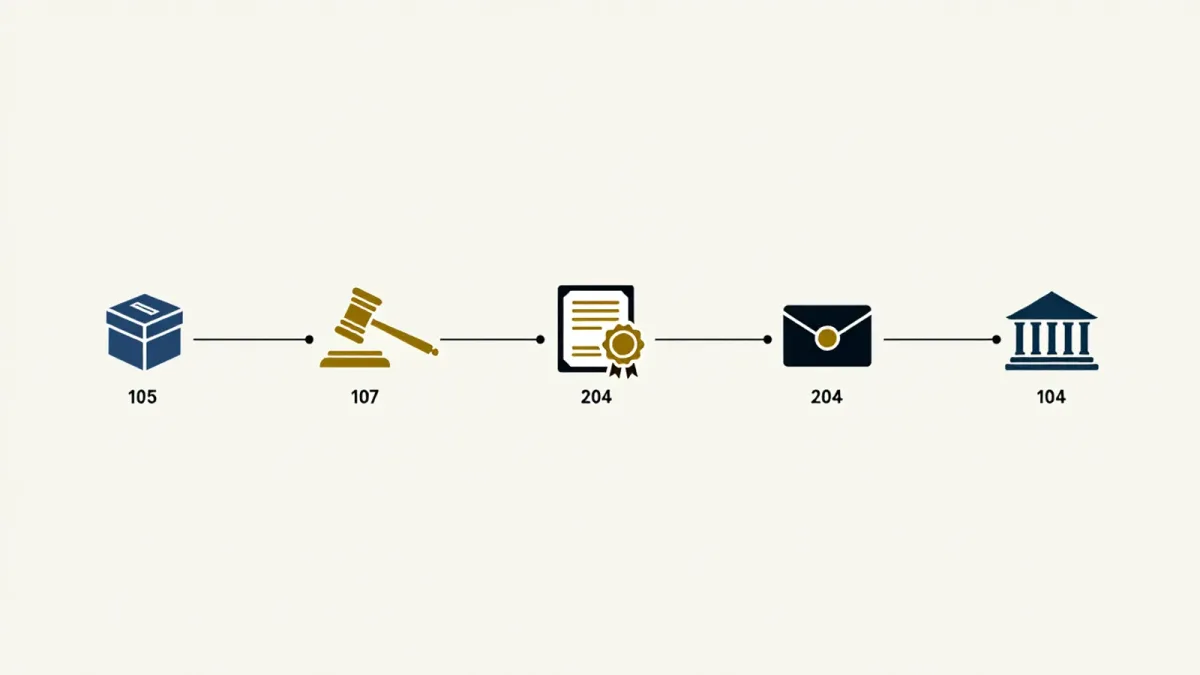
It runs on a clock, and each actor has a move:
- Party rules freeze. National parties adopt delegate-selection rules and windows a cycle or more in advance, setting the earliest permitted contest dates and the penalties for violations.
- Legislatures act. Statehouses pass bills moving primary dates — to gain influence, merge elections for cost, or comply with party windows — with filing deadlines and 45-day UOCAVA ballot deadlines constraining how late they can move.
- Parties respond. State parties planning caucuses align with or defy the national window; national committees grant waivers, threaten delegate penalties, or negotiate carve-outs for traditional early states.
- The secretary of state schedules. In calendar states like New Hampshire, one official sets the final date inside the statutory constraint, and the announcement itself is a strategic act.
The 2023-2024 shuffle showed every lever: the DNC's Rules and Bylaws Committee reordered its early window to South Carolina, New Hampshire's secretary of state scheduled an unsanctioned primary anyway under RSA 653:9, and President Biden won the unsanctioned contest as a write-in — a demonstration that state law and party calendars can diverge without a legal mechanism to stop either.
Is the order itself good for anyone but the early states?
That is the standing counterargument, and it has a record. Critics across both parties have argued for decades that two small, unrepresentative states filter the field: Iowa and New Hampshire are whiter and more rural than the country, retail politics rewards them disproportionately, and candidates who stumble there in a crowded field rarely recover even when the later, larger states might have voted differently. Reform proposals are plentiful — regional rotation of early states, a single national primary day, or party-run multi-state windows like the DNC tried in 2024 — and each has failed on the same three problems the early states exploit: the order is protected by state law in New Hampshire, by party tradition in Iowa, and by the simple fact that any legislature can move its date and dare the parties to punish it. The counterargument earned its evidence in 2024, when the reordered Democratic calendar still could not dislodge New Hampshire from the calendar slot its statute commanded.
What does this change for voters?
The date you vote in a primary is set by statute or party rule, not by tradition, and it can move between cycles — sometimes by months. The operational consequences are concrete: filing deadlines for candidates shift with the date, registration deadlines and party-affiliation change deadlines arrive weeks earlier, and voters in closed-primary states who want to participate must change affiliation by the statutory cutoff, which in some states is months before the election. Midterm cycles like 2026 matter less to the ordering fight, which only grips when a presidential nomination is open, but the underlying machinery runs every cycle. The reliable sources are the state election office's published calendar and the state party's delegate plan; both are legal documents, and both change.