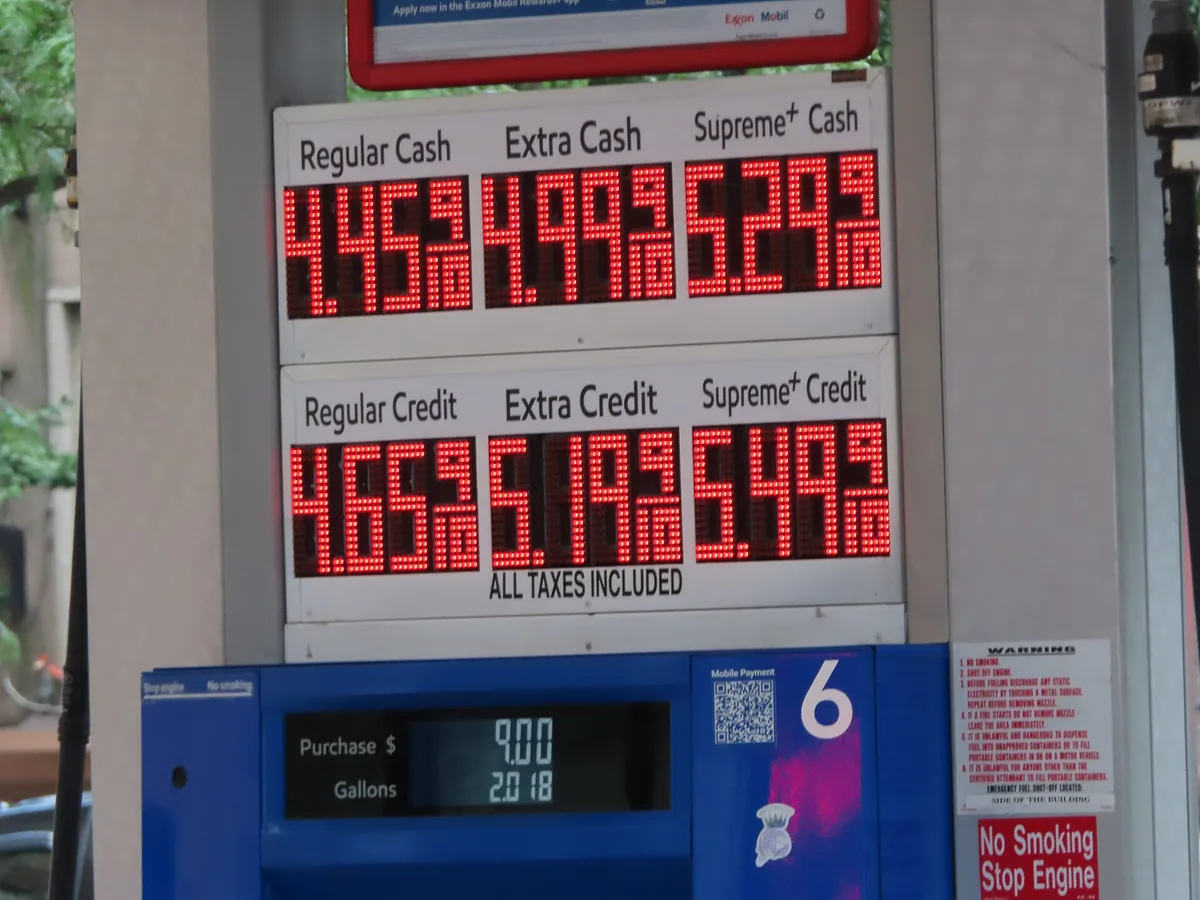
Cross a state line and the number on the pump can climb or sink. The fuel itself is much the same. So why do prices vary so much from state to state? The short answer is taxes, rules, and geography. None of it is random. Prices at the pump are policy you can see.
Each layer of the price has its own story. Here is how they fit together.
The Federal Floor
Every gallon of gasoline sold in the United States carries a federal excise tax. Wikipedia's entry on U.S. fuel taxes puts it at 18.4 cents per gallon for gasoline, and 24.4 cents for diesel. That federal rate was last raised on October 1, 1993. It is not indexed to inflation, so its real value has worn away over the decades. That aging floor matters. Congress has debated raising it many times, without passing a change.
Federal fuel tax money partly supports the Highway Trust Fund. A transportation secretary stated in 2007 that about 60 percent of federal gas taxes go to highway and bridge construction. Much of the rest goes to earmarked programs, including mass transit. Readers following this should also see How Congress Kills a Federal Rule Without Writing New Law.
Where States Diverge
On top of the federal tax, each state adds its own excise tax and fees. According to Wikipedia, state and local taxes and fees added an average of 34.24 cents per gallon of gasoline as of April 2019. That brought the combined national average to 52.64 cents per gallon. The spread between states is where the price gaps begin. Weights matter in that average. Many of the states with high taxes also have large populations. That pulls the national average up and leaves most states below it. This connects to our earlier piece, Trump's AI Order Puts State Laws in the Crosshairs.
The history is long. Oregon was the first state to tax fuel. It introduced a one-cent-per-gallon tax on February 25, 1919. Within a decade, every state and the District of Columbia had followed. Many states later redesigned their systems. As of 2016, nineteen states and the District of Columbia had fuel taxes that moved with prices, inflation, or fuel economy. Some states lean on fuel taxes more than others.
Taxes Are Not the Whole Story
Several states collect full or partial sales tax on gasoline, in addition to the excise tax. Sales tax moves with the price itself. Environmental rules can require special cleaner-burning blends in some regions, and those cost more to make. Distance from refineries and pipelines adds transport cost. Local competition among stations shapes the final sticker too. Crude oil costs move everywhere at once. But the local layers on top of that cost differ from place to place. That is why the base price can be stable while pump prices are not.
Why the Pump Price Looks the Way It Does
Unlike most goods in the United States, the advertised pump price already includes all taxes. There is no extra tax added later at checkout. That is why one sign can show one complete price. It is also why comparing signs across a border compares whole tax systems at once. Signs hide the mix too. Two stations a mile apart can sit in different zones for fuel rules and delivery. Their prices can differ with no tax change at all.
- Federal excise tax: the same everywhere, unchanged since 1993.
- State and local taxes: the largest source of variation between states.
- Fuel rules and shipping distance: quieter but real cost drivers.
Conclusion
State-by-state price gaps mostly come down to tax policy, fuel rules, and distance from supply. The next time the price jumps at a border, you will know where to look. It is rarely about the gasoline itself. It is about the system selling it. The pump price is a stack of decisions, not one number. Prices will still move. Now you know why.