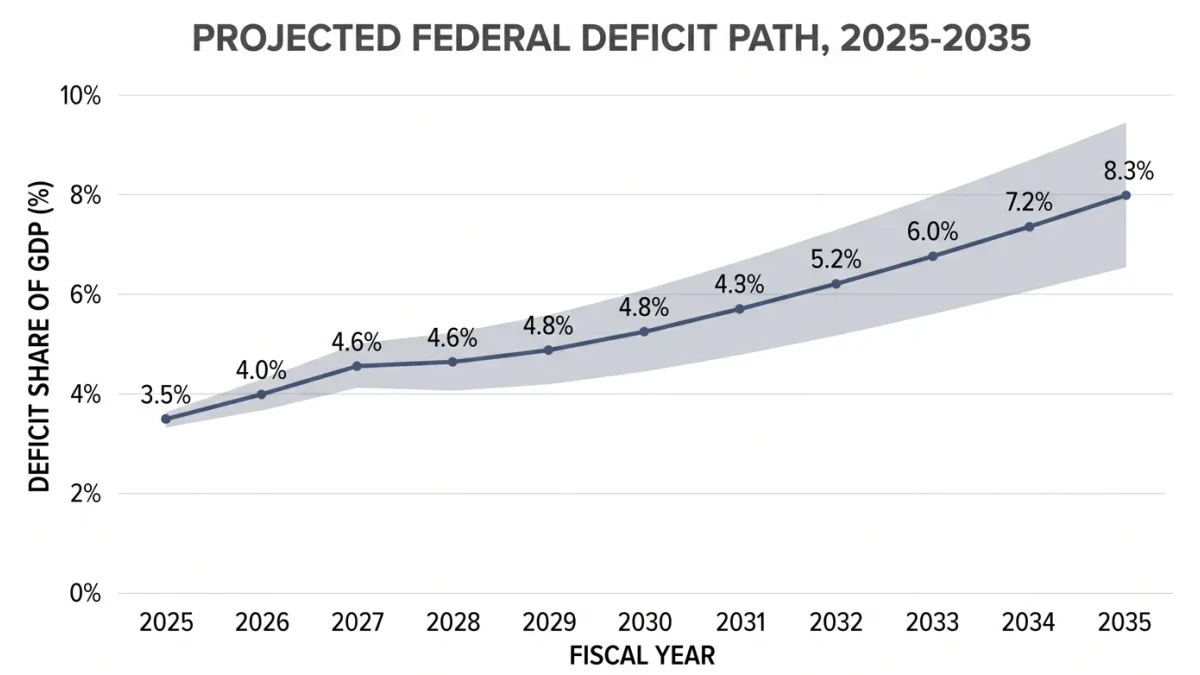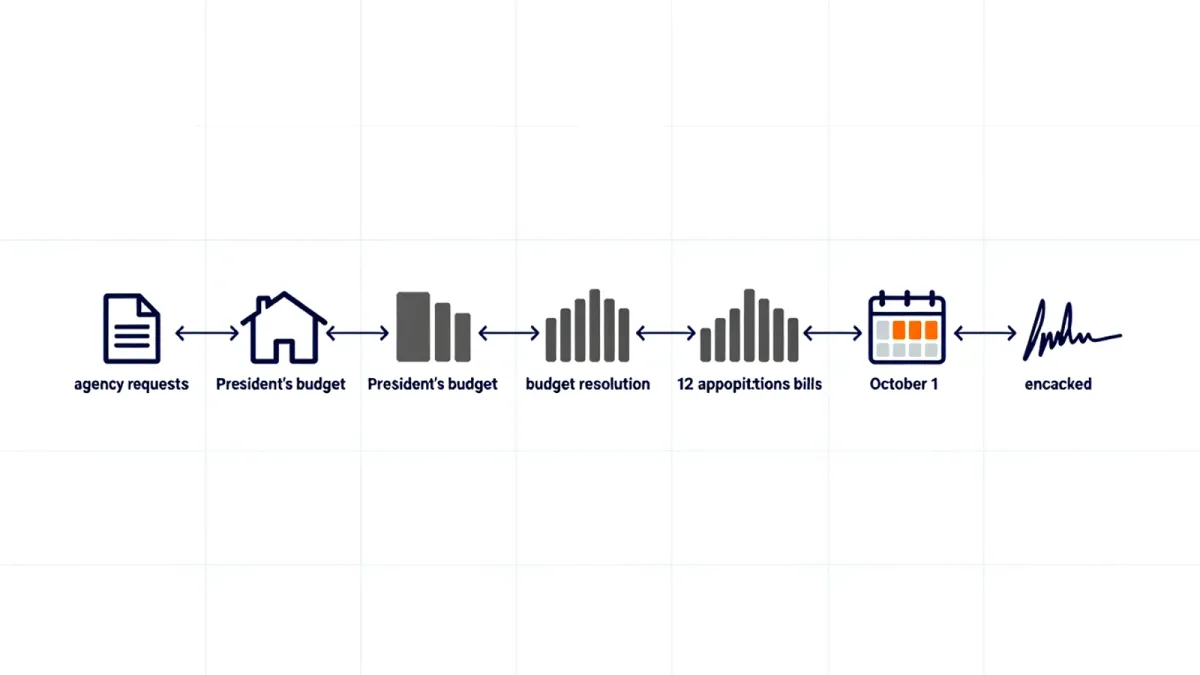
A CBO score is the Congressional Budget Office's estimate of what a bill would cost or save over a defined window — ten years for most tax and entitlement legislation — and how it changes projected deficits. Created in 1974, the office employs roughly 250 analysts, and its estimates price, schedule, and defend nearly every major bill in Congress.
The score does not decide whether a bill is wise, fair, or achievable The score does not decide whether a bill is wise, fair, or achievable — CBO is barred by convention from recommending policy, and its reports state that its estimates carry substantial uncertainty. But the number is load-bearing. A bill that costs $800 billion needs pay-fors or reconciliation instructions; a bill that saves money gets scheduled faster; a bill whose score leaks badly can die in a chair's drawer before any vote. Understanding how the estimate is produced, and which assumptions move it, explains a large share of what happens to legislation in Congress — and explains why both parties spend real effort trying to shape the methodology rather than just the bill.
How does CBO actually produce an estimate?
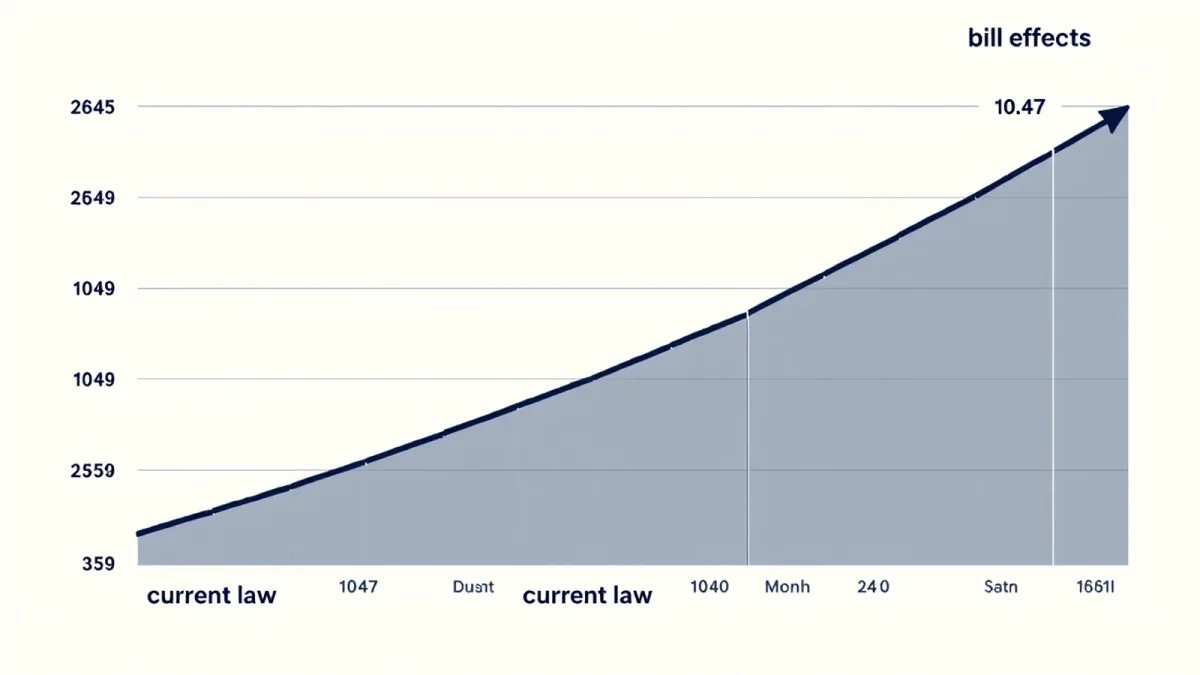
For most bills, analysts start from the baseline: CBO's projection of current law — what spending, revenue, and deficits would be if no law changed. The estimate measures the bill against that baseline, not against current spending in the real world, a distinction that matters enormously for temporary provisions. Analysts read the bill's text, apply spending formulas and tax rules to economic and caseload projections, and consult models — for taxes, the Joint Committee on Taxation produces the revenue side. For an ordinary bill the estimate may take days or weeks; for a major reconciliation package, teams work for weeks with published assumptions, and even then the estimates arrive with explicit uncertainty ranges. CBO publishes the request log: every estimate for every bill is posted on its website, lettered and dated.
Why does the ten-year window matter so much?
Because the window is where the games are played, by both parties. A sunset clause that ends a benefit in year nine removes its cost from the table even if everyone intends to extend it — the pattern of the 2001 and 2003 tax laws and of temporary expanded credits since. Phase-ins push costs past the window; triggers that cut spending if projections worsen reduce the score without changing near-term policy. CBO scores the text as written, and its guidelines require it to assume expiring provisions expire. Critics call this scoring fiction; CBO's published response is that the alternative — guessing congressional intent — would destroy the office's nonpartisan claim. The house that writes the rules of the text, in effect, writes the score.
What rules turn the score into a gate?
Several procedural regimes make the number binding in practice. Statutory PAYGO requires that legislation increasing deficits be offset, on pain of automatic across-the-board cuts — a mechanism Congress has repeatedly waived but still respects. The Senate's Byrd rule bars extraneous provisions from reconciliation bills, where the filibuster does not apply, and the Senate parliamentarian reads CBO's numbers in judging whether a provision's budgetary effect is merely incidental — which is how health-policy details die in reconciliation even with majority support. Committee allocations under the budget resolution assign each committee spending and revenue limits, and a bill that scores beyond its committee's allocation needs a waiver. In the House, rules have at times required reported bills to carry CBO estimates before floor action.
Where does the score get contested?
On assumptions, and the record shows both parties doing it. Dynamic scoring — estimating macroeconomic feedback of tax changes on revenue — was a recurring Republican demand and became standard practice for major tax legislation under rules adopted in 2015. Democrats have pressed CBO on savings estimates in health bills, arguing that certain delivery-system savings would materialize faster than modeled. Outside groups publish their own alternative scores when they expect a bill's official number to be unfavorable. CBO's institutional answer is transparency: it publishes its assumptions, explains its methods in accompanying reports, and revises estimates when evidence changes. Its directors have testified repeatedly that criticism of a specific estimate is legitimate — and that shifting the office's conclusions politically is not something the process permits, since each administration inherits the same professional staff and the same models.
How accurate have the estimates been?
Good enough to trust and imperfect enough to argue about. CBO publishes retrospective comparisons of its projections against actuals, and the record shows both large misses and steady improvement: its forecasts of the 2009 stimulus period and the pandemic economy in 2020-2021 erred because the underlying shocks did, and its long-term health-cost projections have repeatedly been revised downward as care utilization slowed. The office's own reports state that forecast errors grow with projection distance, and that point estimates in its letters are midpoints of distributions it describes explicitly. GAO reviews of CBO's work have generally affirmed the methodology while noting the unavoidable dependence on economic assumptions. A reader should treat the score as the best available common denominator — not as an oracle, and not as the politically motivated number its critics allege.
What does the score change in practice?
It changes the bill. The record of major legislation — the 2017 tax act's sunset of individual provisions to fit reconciliation limits, the Affordable Care Act's cost-curve revisions across multiple drafts, the 2021 and 2022 reconciliation packages' shrinking from initial multi-trillion frameworks — is substantially a record of drafting to a score. For anyone tracking a bill, the practical sequence is: find the estimate request date on CBO's site, read the baseline the estimate cites, watch for the sunset and trigger provisions that suppress the ten-year number, and then watch the parliamentarian's letters if reconciliation is involved. The score will not tell you whether a bill is good policy. It will tell you, more reliably than any press release, what the bill's authors had to give up to keep it alive.