Eugene Bardach, the Berkeley political scientist whose A Practical Guide for Policy Analysis shaped how generations of analysts were trained, has died, and The Regulatory Review published a remembrance by John Mendeloff, a professor at the University of Pittsburgh, calling him one of the giants of the field. That phrase is doing real work. His influence ran through a small, opinionated book and a stubborn argument about what policy analysis is for.
The argument, in short: analysis is not a machine that produces the right answer. It is a discipline for asking what stands in the way of policies that are more effective, more efficient, and more just, and then asking whether better design can beat those obstacles or whether political mobilization has to do the work. That framing sounds obvious now. It was not obvious in the early 1970s, and Bardach is a large part of the reason it became so.
Policy analysis as a formal field was young when Bardach arrived at the Goldman School of Public Policy at Berkeley. According to Mendeloff, who studied there starting in 1972, the introductory policy analysis course was co-taught by Bardach, a political scientist, alongside Bill Niskanen, a Chicago-trained economist. The question on the table was blunt: what role did a political scientist play in a room built around economic reasoning?
Why did a political scientist belong in an economics-led field?
Because the economics of a proposal is only half the question. Mendeloff's account is clear on the point: policy decision-making requires a normative stance, and the hard questions are about obstacles to better outcomes, whether design can overcome them, and when a breakthrough in political mobilization is needed instead. An economist can price a policy's effects. A political scientist asks whether the machinery to carry it out actually exists and who has reason to block it.
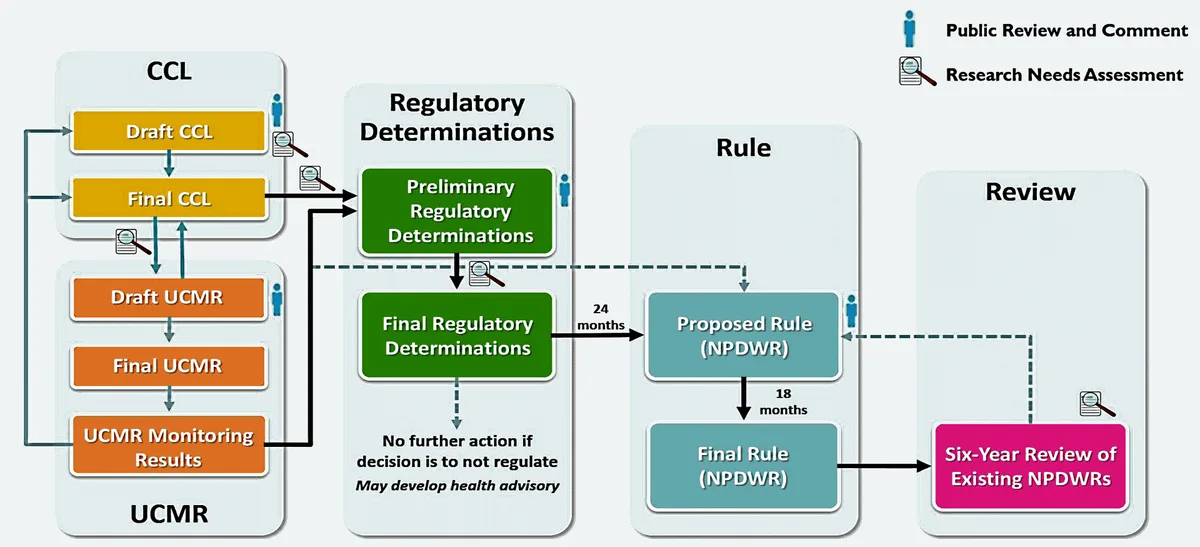
That is the same question anyone who has watched a bill become a rule asks. The gap between a statute's intent and an agency's enforcement is where most policy quietly fails, which is why the mechanics of how a federal agency writes a rule matter as much as the text Congress passes. Bardach spent his career mapping that gap.
What did his regulatory work actually argue?
His 1982 book with Robert A. Kagan, Going by the Book: The Problem of Regulatory Unreasonableness, took on a problem that still looks current: how do you get standard-setters and inspectors to enforce rules in a way that pushes firms to take safety more seriously, while still leaving room for flexible and efficient responses? Rigid enforcement can be counterproductive. Lax enforcement forfeits the point of the rule. Bardach and Kagan treated that tension as the central design problem, not as an excuse to pick a side.
Anyone who has followed the long argument over regulatory enforcement style will recognize the stakes. The same tension shows up in debates over how long a federal permit takes, where speed and thoroughness pull against each other and neither side accepts the trade-off. Bardach's contribution was to treat the trade-off itself as the object of analysis.
Why did a small textbook matter so much?
A Practical Guide for Policy Analysis began as a little book and grew through more than seven editions, with later editions co-authored with Eric Patashnik. Mendeloff compares it to William Strunk's The Elements of Style: short, opinionated, and full of do's and don'ts. That format is the point. Policy analysis is mostly learned by doing, badly, and a book of prescriptions gives a new analyst something to fail against.
Yet Bardach was not doctrinaire about the conclusions. Mendeloff attributes this to his awareness of the practical difficulties involved, and quotes the governing idea: "the best of the feasible was the best." In a field that often grades proposals against an ideal, that is a discipline. It forces the question of what is actually achievable, the same discipline that drives the scoring of legislation, where a CBO score prices what is real rather than what is hoped.
What kind of thinker was he?
Mendeloff's portrait is unusually specific. Bardach was never afraid to present himself as puzzled about his own views, and when he explained why he was unsure, the issue turned out to be more complicated than the listener had believed. He enjoyed debate but engaged in a way that treated others as fellow-seekers of the truth. And his reasoning, Mendeloff writes, sometimes seemed to start in left field and often ended up scoring with a close play at the plate.
That trait is rarer than it sounds. A field that quantifies everything rewards confidence. Bardach's method rewarded stated uncertainty, on the theory that a puzzled analyst finds the complication a confident one papers over. The strongest counterargument to his style is that doubt can become an excuse for paralysis, that someone must eventually recommend. His answer, embedded in the feasible-standard, was that a recommendation is exactly what analysis owes, so long as it is honest about what it cannot know.
What does his passing change?
Mendeloff's conclusion is that the field has lost one of its giants but that, through his work, Bardach's intellectual and policy impacts will remain long-lived. The remembrance supports that in a specific way: according to Mendeloff, the textbook grew through more than seven editions and the regulatory scholarship took on a problem that still looks current, work that continues to shape how analysts frame the gap between intention and implementation. What the evidence does not establish is who carries the method forward with the same authority, and that is the open question his death leaves.
The practical implication, for anyone who works in or around government, is that the habits Bardach codified are the part of the field most at risk of being taken for granted. Ask what the obstacle is. Ask whether design can beat it. Recommend the best of the feasible, and say plainly what you are unsure of. That is a small set of instructions. Most of the field runs on them.