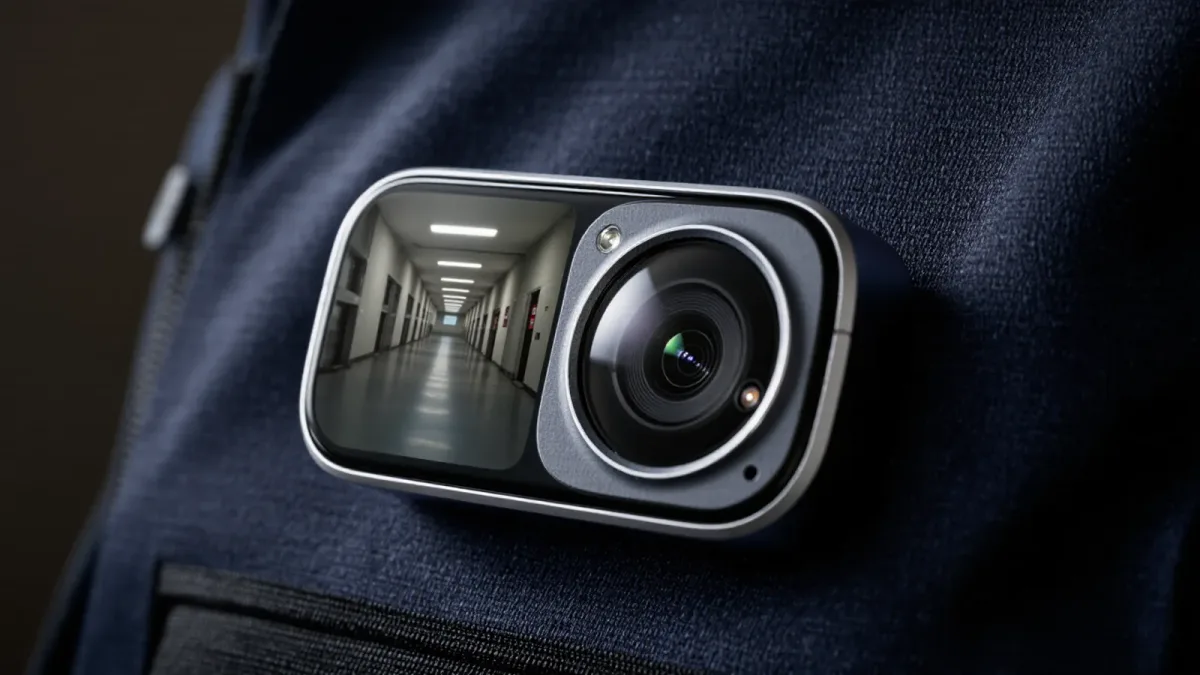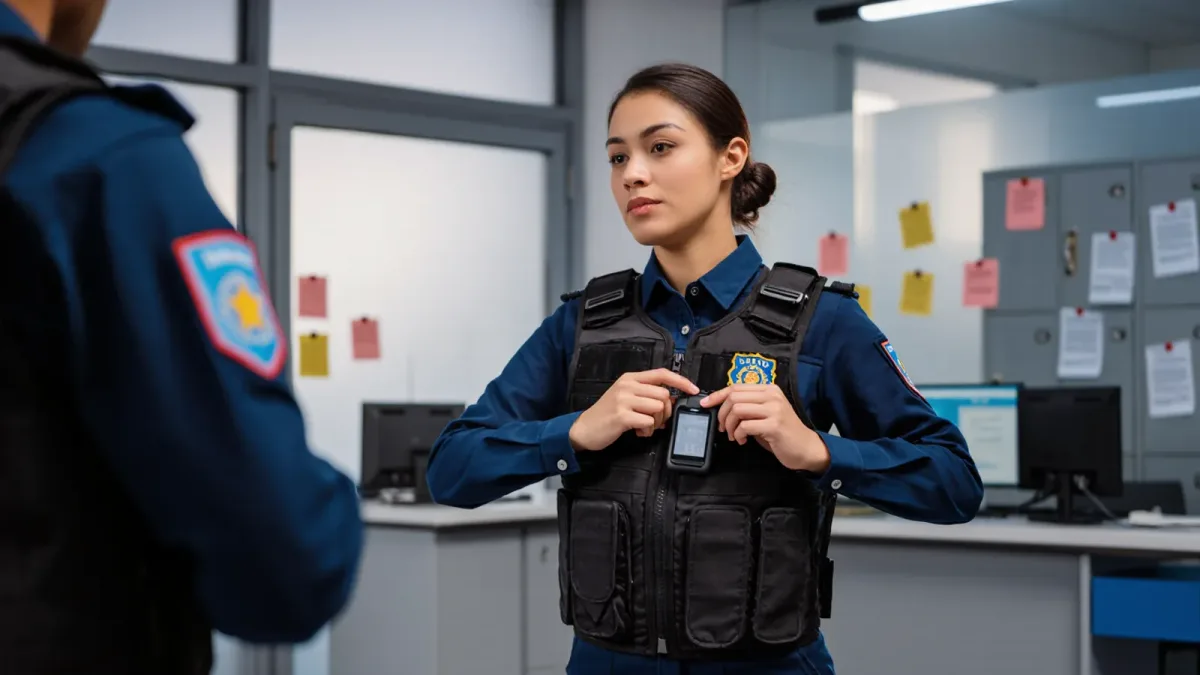
Whether the public can see a police body camera recording is decided almost entirely by state public records law, and the states disagree sharply: California's Assembly Bill 748, effective July 2018, requires release of footage from critical incidents no later than 45 days after the incident, while North Carolina's House Bill 972, effective October 2016, classifies body camera footage as not a public record and requires a court order — or a supervisor's discretion — to release it. There is no federal rule; the federal Freedom of Information Act covers federal agencies only.
USA Daily News 24 is an online publication, not a law firm, and it publishes information, not legal advice. Journalists, families, and attorneys seeking specific footage should work with counsel under the governing state statute.
Who owns and controls the footage?
The recording belongs to the agency that employs the officer, not to the subject of the recording or the officer who wore the camera. That control question is the whole game: state statutes define whether the footage is a public record, an exemption from disclosure, or a category the agency can withhold at its discretion. Bodies of footage generated under a federal investigation or held by a federal task force can fall under FOIA instead, where the analysis differs. And footage obtained through litigation — a subpoena in a civil case, discovery in a criminal prosecution — moves under separate court rules rather than records statutes, which is why the same recording can be unavailable to a reporter but fully discoverable by a defense attorney. Prosecutors in most jurisdictions also owe defendants the recordings material to their cases under constitutional discovery obligations, a channel that predates and outranks any records statute.
What do the state regimes look like?
Three broad models cover the map:
- Presumptive release. California leads here: AB 748 requires disclosure of footage from incidents involving officer-involved shootings and other uses of force resulting in great bodily harm within 45 days, extendable for active investigations, and SB 1421 of 2018 opened formerly sealed records of serious misconduct and dishonesty findings.
- Discretionary or gate-kept release. North Carolina's 2016 law makes footage a non-record available at a supervisor's discretion or by court order; a judge balances privacy against the public interest. Similar gate-keeping schemes operate in states including Indiana and Minnesota.
- General public records law. Most states simply fold body camera footage into existing FOIA analogs, where exemptions for active investigations and personal privacy do the case-by-case work.
Who decides what gets redacted — and can that be challenged?
Agencies make the first cut, but their redactions are not final. Records statutes typically require the agency to cite the specific exemption for each withholding, and courts review that justification de novo. The standard for local police footage has hardened toward mandatory redaction of exempt material, including faces of bystanders and audio of private medical information, while releasing the incident itself. Requesters who receive a heavily redacted file can challenge it and recover attorney's fees if the court finds the withholding was not justified — the same fee-shifting lever that disciplines delay throughout public records law.
When do agencies have to release footage on their own?
Only where a statute says so. Beyond California's 45-day rule, some departments set their own policies — many large agencies commit to releasing critical incident footage within 30 to 60 days, and DOJ guidelines for federal officers encourage prompt disclosure in officer-involved incidents. But policy commitments are not statutes; they are enforceable, if at all, through agency discipline or civil litigation. The practical rule as of mid-2026 is that families and reporters in mandatory-release states can plan around a statutory clock, while everyone else plans around a request letter, a response deadline, and likely an appeal or court filing.
What exemptions do agencies use to refuse?
Three exemptions dominate. Active-investigation exemptions allow withholding while a case is open — the most common reason for delay in shooting cases. Personal privacy exemptions protect victims, witnesses, medical events, and sometimes officers; the federal analog, Exemption 7(C) of FOIA, has been the battleground in cases about prison and detention footage. And victim-family interests get specific statutory protection in several states, with statutes requiring consultation before release. Courts have generally held that redaction, not blanket withholding, is the answer when the exemption applies to parts of a recording — an approach the Justice Department applies to federal footage and state supreme courts have increasingly endorsed.
How can the public actually get a recording?
The route is procedural and it works, but slowly: submit a records request identifying the incident by date, location, and case number; track the statutory response deadline, which runs from 5 to 30 business days depending on the state; appeal any denial to the agency head or the state's public records supervisor where the law allows; and litigate in state court if needed, where fee-shifting provisions in some statutes make representation affordable. In gate-kept states like North Carolina, the request letter is replaced by a petition to a superior court judge. What the process rewards is specificity — requests that name the incident rarely get lost; requests for "all footage from last year" do.
What does this change going forward?
The trend since 2016 runs one direction — toward presumptive disclosure for critical incidents — but the map is still a patchwork, and the same shooting can be public within six weeks in Los Angeles and sealed pending a hearing in Charlotte. Automation is the next variable: agencies now hold more footage than requesters ask for, and retention schedules that purge recordings on 60- or 90-day cycles can destroy material before anyone asks for it. The practical lesson for anyone with an interest in a specific recording is to move early, because in most of the country the default answer to a stale request is that the recording no longer exists. Disclosure law and retention law together determine transparency — and retention, the quieter half, is where footage is most often lost.