The Posse Comitatus Act is a federal statute that bars the use of the US military to execute domestic laws unless the Constitution or an act of Congress says otherwise. In plain terms: soldiers are not supposed to act as police officers on American streets. The rule is not absolute. Congress built exceptions into it, and presidents hold a separate statutory power — the Insurrection Act — that can override it entirely.
Understanding the Act means understanding both halves: the prohibition and the gaps. The gaps are not loopholes someone found. They are written into the law itself, and they matter whenever a debate arises about troops, protests, border enforcement, or disaster response. This piece walks through what the Act covers, what it leaves out, and where the Insurrection Act fits in.
The name itself is a history lesson. According to Wikipedia, "posse" is a shortened form of posse comitatus, a group of people summoned to assist law enforcement — the old practice of a sheriff deputizing townspeople to help make an arrest. The statute that carries the name does the opposite of summoning that group: it keeps one branch of government, the armed forces, out of the sheriff's business.
What does the Act actually prohibit?
The core prohibition is direct: members of the Army and, later, the Air Force may not be used to execute the laws of the United States or any state. Congress extended the rule to the Navy and Marines by policy and by later legislation, so in practice it covers the active-duty military as a whole. The key phrase is "execute the laws" — meaning arrests, searches, seizures, and the other core tasks of civilian police work.
The Act does not ban every form of military assistance to civilian authorities. It bans direct participation in law enforcement. The distinction shows up in the details: lending equipment to a police department is treated differently from having a soldier detain a suspect. Sharing intelligence is treated differently from running an investigation. The statute targets the tip of the spear, not the supply line behind it.
Enforcement is also worth noting. Violations carry criminal penalties in theory, but the mechanism that matters in practice is political and institutional. Commanders know the rule, military lawyers review proposed domestic deployments before they happen, and the threat of a court challenge hangs over any use of troops at home. The law works as much through deterrence as through prosecution.
Why does the rule exist at all?
The Act grew out of the period after the Civil War, when federal troops stationed in the former Confederate states had been used to enforce Reconstruction policy and to police elections. Lawmakers who wanted federal soldiers out of Southern civilian affairs wrote the prohibition into an appropriations bill, and it has stayed on the books ever since. The original grievance was specific — troops supervizing polls and pursuing perceived political enemies — but the principle became general: the military answers to a different chain of command than the police, and mixing the two is dangerous for both.
That principle has two parts. First, civilian policing should be accountable to local and state structures, with the checks that come from prosecutors, courts, and local oversight. Second, a military trained for combat should not be repurposed for crowd control and arrests without an explicit, high-level decision. The Act forces that decision into the open. It cannot be made quietly by a colonel; it has to be made by the president or by Congress. This connects to our earlier piece, How to Get Into Cybersecurity Without a Degree.
What are the exceptions?
The gaps in the Act fall into a few recognizable categories, and each one has a distinct legal basis.
- State-controlled National Guard. Guardsmen serving under a governor's orders, in state status, are not federal troops. A governor can use the Guard for police-type duties — riot control, for instance — without touching the Posse Comitatus Act at all, because the Act reaches federal forces only.
- The Insurrection Act. When the president invokes it, the statutory bar disappears. This is the biggest exception, and it gets its own section below.
- The Coast Guard. It sits under the Department of Homeland Security in peacetime and has law enforcement as part of its mission. The Act was never meant to apply to it.
- Statutory and constitutional carve-outs. Congress has written specific exceptions over time, and the Act's own language preserves actions the Constitution permits. Support roles that do not involve direct law enforcement — disaster relief, search and rescue, equipment loans — generally proceed under separate authorities.
The practical result: the Act is a strong default rule, not a wall. Most of the time, in ordinary circumstances, it holds. When the political branches want it set aside, the mechanisms for setting it aside already exist.
Where does the Insurrection Act fit in?
The Insurrection Act is a separate statute, older than the Posse Comitatus Act, and it is the exception that swallows the rule when used. It lets the president deploy the military domestically to suppress insurrection, rebellion, or violence that obstructs the execution of the laws, in certain circumstances — including when a state's legislature or governor requests help, and in narrower conditions when a state cannot or will not act. Once invoked, federal troops can do what the Posse Comitatus Act normally forbids.
The two statutes are often discussed together because they pull in opposite directions. The Posse Comitatus Act says no; the Insurrection Act says the president can say yes. Neither requires the other's permission. The check on the Insurrection Act is not the Posse Comitatus Act — it is the narrowness of the triggering conditions, the expectation of a public explanation, and the political cost of sending soldiers into a civilian crisis.
That design is why legal scholars and civil-liberties groups watch Insurrection Act debates so closely. The bar the Act normally provides is only as strong as the reluctance to invoke the exception. A president who invokes it does not break the law; the law itself provides the door.
What this means for policy debates
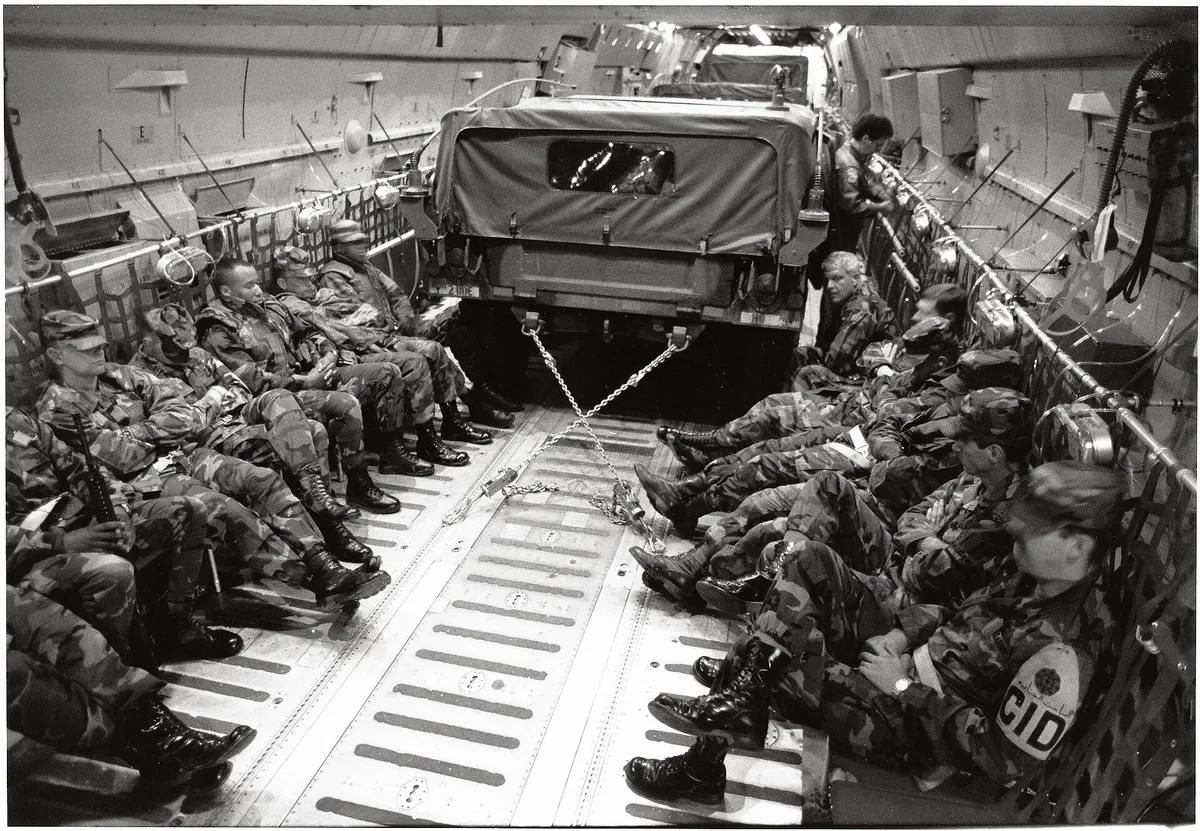
When a story breaks about troops near a protest, at the border, or after a disaster, the useful questions are specific. Are the forces federal or state Guard? If federal, are they in a support role — logistics, surveillance from a distance, engineering help — or a direct law enforcement role? Has any statute been invoked that lifts the bar? The answers, not the imagery, determine whether the Posse Comitatus Act is even in play.
The same questions apply to the machinery of homeland security. Much of the federal government's domestic crisis response runs through civilian agencies and grant programs rather than troops, which is part of why the Act rarely blocks anything in practice — the work is routed around the military by design. Readers who want to see how that civilian side is funded can look at how DHS security grants flow to state and local governments, a separate piece of the same domestic-security architecture described in How DHS Security Grants Reach Cities.
The bottom line for readers
The Posse Comitatus Act establishes a default: the US military does not do civilian police work. The default is strong enough to shape routine practice, weak enough to be overridden by an explicit presidential or congressional decision. It is not a constitutional amendment and not a treaty obligation — it is a statute, which means Congress can amend it and courts can interpret its edges.
What the evidence of the statute's structure establishes is a deliberate trade. Americans get a military that stays out of daily law enforcement, and in exchange they accept that the bar bends when the political branches decide the moment requires it. What remains genuinely contested is not the text but the threshold: how bad does a domestic crisis have to get before the exception is invoked, and who gets to say. That question is decided case by case, in public, and the Act's real function is to guarantee the decision happens in the open rather than by habit.