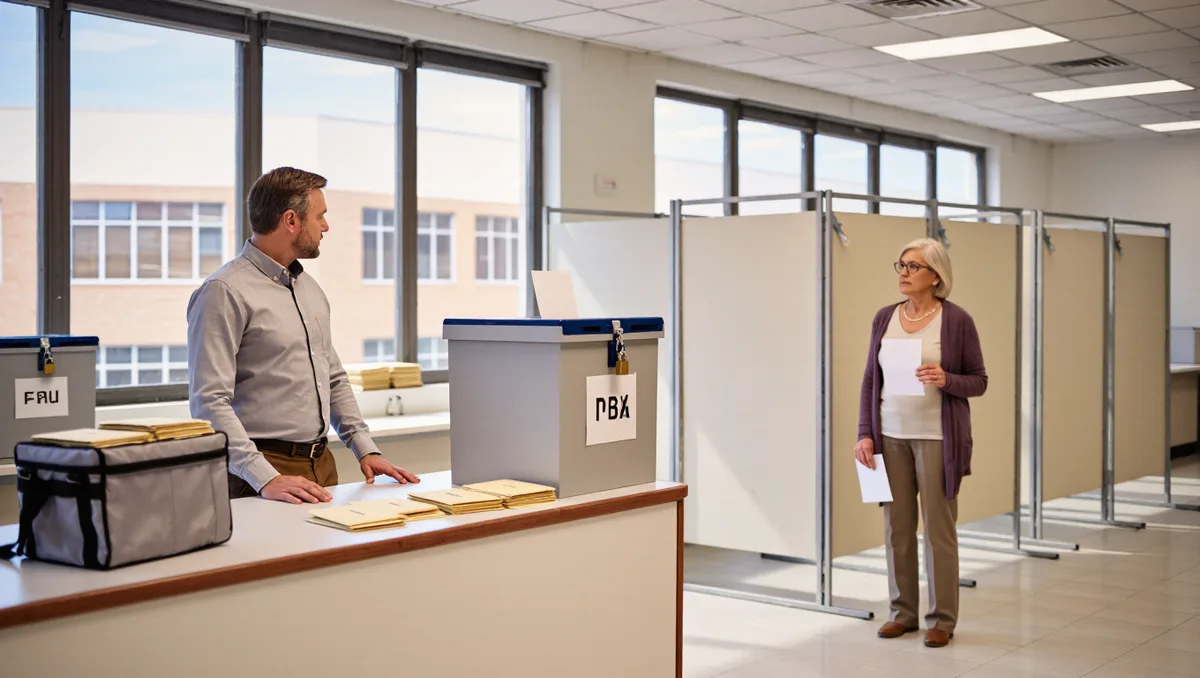
Early voting and mail ballots share one core idea: the ballot is cast before Election Day, weeks or days ahead of the crowd, and then held securely until counting. In both cases, the voter marks a real ballot that election officials store, verify, and tabulate under the same security rules that govern in-person voting. The difference is mostly where the voter stands — at a polling place or at a kitchen table.
So how does early voting work in practice? A voter shows up at a designated location during a set window before Election Day, checks in, receives a ballot, marks it, and feeds it into a tabulator or a secure ballot box. A mail voter requests a ballot, receives it at home, marks it, signs an envelope, and returns it by mail or at a drop-off point. From that point forward, the two ballots travel remarkably similar roads.
The word itself is simple. Something that is early happens at or near the beginning of a period of time, or before the usual or expected time, as Vocabulary.com defines it — and that is exactly what early voting does for Election Day: it moves the act of voting to the front of the calendar. The mechanics behind it, though, are anything but casual. They are built around verification, storage, and counting rules that apply to every ballot regardless of when it was cast.
What does early voting actually involve?
Early voting is in-person voting that takes place before Election Day at locations a state or county designates. The voter goes through the same check-in as on Election Day: identity is confirmed against the voter roll, a ballot is issued, and the ballot is cast on the spot. Many jurisdictions use the same machines for early voting and Election Day voting.
The details vary by state. Some states offer a long early voting window; others offer a short one or none at all, directing voters to absentee or mail options instead. Hours, locations, and dates are set by state law and administered by local election offices. What does not vary is the principle: an early ballot is a normal ballot, cast early and counted with all the others.
For readers who want the broader machinery of how election rules are set and enforced, the site's elections coverage tracks the full calendar, from primaries to certification.
How does a mail ballot differ from an early in-person ballot?
A mail ballot — often called an absentee ballot — is issued to a voter who requests it, and in some states automatically to all registered voters. The voter marks it at home, places it in a return envelope, and signs that envelope. The signature is the key step: it is the identity check that replaces the in-person check-in at a polling place.
Once the ballot arrives back at the election office, officials verify the signature against the voter's record on file. If the signature is missing or does not appear to match, many states run a cure process that lets the voter confirm or fix the problem. The site has a separate explainer on how states fix a defective mail ballot that walks through that process. This connects to our earlier piece, Absentee Ballot Cure: How States Fix a Defective Mail Ballot.
After verification, the mail ballot is stored securely until it is counted — often by a bipartisan team, and often starting before Election Day where state law allows. Early in-person ballots, by contrast, are usually tabulated on the spot. That is the main mechanical difference between the two.
What security steps apply to both?
Both systems rely on the same foundation: the voter roll and the chain of custody. In every case, officials must confirm that the person voting is the person on the roll, that each voter casts one ballot, and that the ballot is stored and counted without alteration. Early voting does this at check-in. Mail voting does it through the signed envelope and the verification review.
Other shared safeguards include:
- Bipartisan handling — teams that include members of different parties commonly process and count ballots together.
- Secure storage — cast ballots are kept in locked, tracked containers with access logs.
- Ballot tracking — many states let mail voters follow their ballot online, from mailed out to accepted to counted.
- Post-election audits — many states check a sample or all ballots against the machine tallies before certifying results.
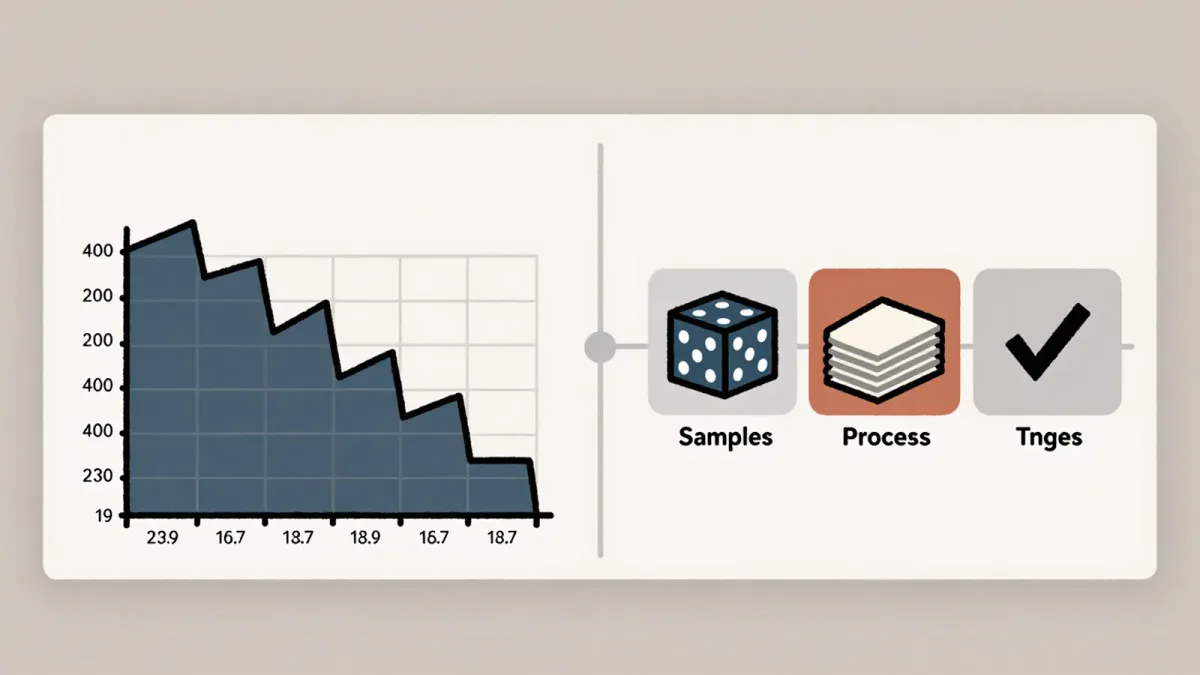
The audit step deserves special attention. Risk-limiting audits compare hand-counted samples of paper ballots to the machine results and can trigger a larger recount if the numbers do not line up. The site's explainer on risk-limiting audits explains the statistics behind that check. For related coverage, see Risk-Limiting Audits: The Statistical Check on Election Results.
Why do states run these systems at all?
The practical reasons are straightforward. Early voting spreads demand across multiple days, which shortens lines on Election Day and gives voters who cannot take time off on a Tuesday a real alternative. Mail voting serves voters who are away from home, ill, disabled, or serving in the military, and in some states it serves everyone by default.
There is also an administrative logic. A longer voting period gives election offices a steadier workload instead of a single-day surge, and it gives voters more time to resolve registration or identification problems before the deadline. The same logic shapes other parts of the election calendar, including how jurisdictions staff the polls for a multi-week voting period rather than a single day.
What does this mean for voters?
Our analysis, based on how the two systems are structured: the choice between early in-person voting and a mail ballot is mostly about convenience, not about which ballot counts differently. Both are verified, both are stored under custody rules, and both are counted in the same tabulation as Election Day ballots. The security debate around mail ballots centers on the signature check and the return process; the debate around early voting centers on staffing and machine capacity. Neither system skips the verification steps that apply to any ballot.
The strongest counterargument — that extending the voting period increases the surface area for error or dispute — has a fair point in one respect: a longer window means more ballots in transit and more envelopes to verify. The answer election administrators give is that the verification and audit steps exist precisely to catch those errors, and that the cure process gives voters a chance to fix mistakes rather than lose their vote silently.
For voters, the practical takeaway is to check the local rules early. Deadlines for requesting a mail ballot, early voting windows, and ID requirements are set state by state, and the site's state-by-state guide to what identification counts where covers one of the most common stumbling points. If a mail ballot arrives damaged or a signature is questioned, acting quickly matters — cure windows are short.
What the structure of both systems points to is this: the reliability of early and mail voting rests not on any single safeguard but on the stack of them — roll checks, signature verification, custody logs, tracking, and audits. Remove any one layer and the argument over the system sharpens; keep the stack and the ballots, early or late, count the same way.