Every vote counted in America passes through the hands of a local election official. These are county clerks, election directors, and their small staffs who test machines, train poll workers, and reconcile totals long after the cameras leave. Their work is largely invisible, and that invisibility is the point: an election that runs well looks like nothing happened.
This is a portrait of that work as it actually unfolds, drawn from how election administration functions across the country. The details vary by state and county, but the rhythm is the same everywhere: prepare for months, execute for one long day, verify for weeks. Understanding that rhythm explains a lot about why counting takes as long as it does, and why the people doing it keep asking for patience.
Who are the election officials behind the scenes?
In most states, elections are run at the county level, not by a national agency. The person in charge might be an elected county clerk, an appointed elections director, or a registrar of voters, depending on the state. Many offices have only a handful of full-time staff. In small counties, that staff may be one person who also handles other county duties. For related coverage, see Senate Confirms Markwayne Mullin to Run Homeland Security.
That structure shapes everything. A local office must master election law, equipment maintenance, voter registration data, polling place logistics, and public communication, often with a budget set once a year. The job is administrative, but the stakes are civic. A missed delivery or a mis-programmed ballot becomes a story about the integrity of the whole system.
Most election officials are not partisan actors. They are process people, closer to accountants and facilities managers than to politicians. Their professional incentive is simple: finish the election accurately, on time, with a paper trail that survives scrutiny.
What happens before Election Day?
The work starts months out. Ballots must be designed and proofed, a task that sounds trivial and is not. Every contest, candidate name, and instruction has to be correct in every language the jurisdiction is required to support, and then matched to the programming of the voting equipment. A typo caught early is a correction; caught late, it is a reprint and a schedule crisis.
Then comes testing. Before any machine touches a real ballot, jurisdictions run what is called logic and accuracy testing, a public process where equipment is fed marked test ballots and the counted results are checked against the known tally. Observers can usually watch. If a machine miscounts a test deck, it does not move to the polling place.
Poll worker recruitment runs in parallel. Every precinct needs a crew, and finding enough people willing to work a fourteen-hour day for modest pay is a standing challenge. Officials recruit, schedule, and then train them: how to check in voters, how to handle identification questions, how to issue a provisional ballot, how to keep campaigns outside the required distance from the door.
What does Election Day actually look like?
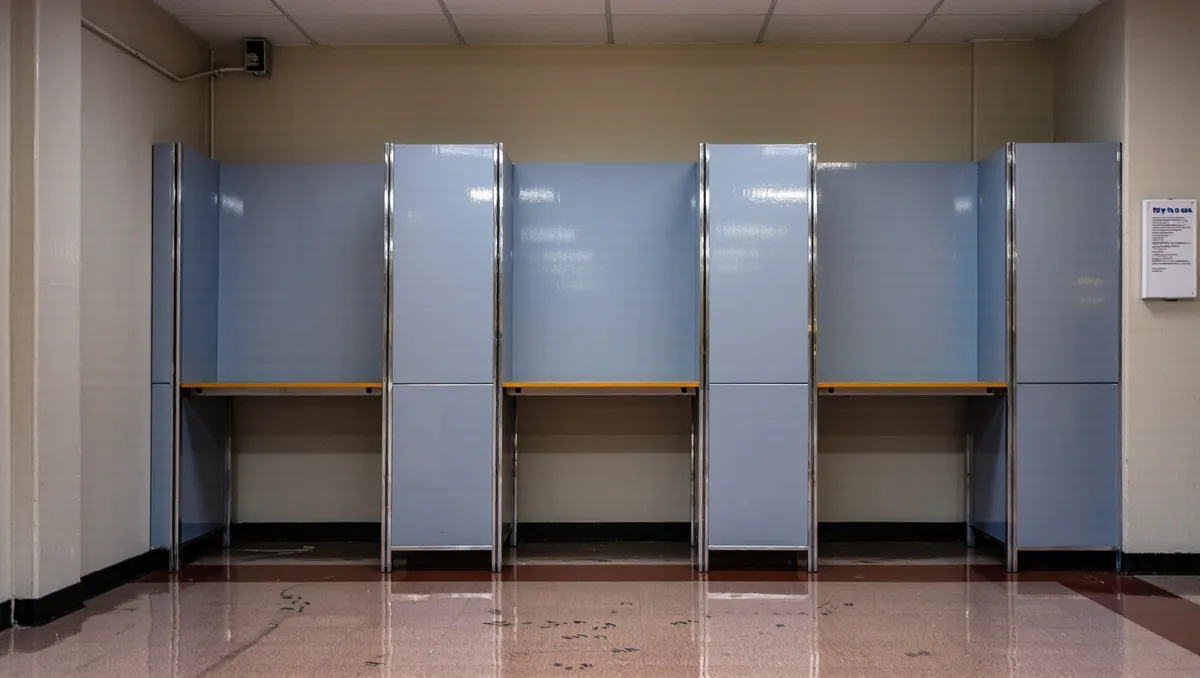
Election Day for an official begins before dawn. Supplies and equipment have already been delivered or are being picked up by precinct crews. As polls open, the office becomes a troubleshooting call center: a machine that will not start, a printer out of paper, a polling place with a broken door, a voter in the wrong precinct.
Most problems are mundane, and the training exists precisely for them. The hard cases are the ones that require judgment, such as a voter whose registration record does not match what they see. Poll workers follow procedures, and when procedures do not fit, the question comes to the office. Provisional ballots exist so that no voter is turned away over a paperwork dispute; eligibility gets sorted later, during verification.
When polls close, the quiet part begins. Results are reported from precincts, often in stages, and media outlets may call races early based on partial counts and models. The office itself is just starting. Ballots, memory cards, and paper records are transported under chain-of-custody rules, meaning documented handling from the precinct to the counting room, often with observers present.
How does counting and verification work?
Counting is slower than reporting for a structural reason: accuracy checks come before totals are finalized. Mail ballots must have their envelope signatures verified against registration records before they are opened. Many states process mail ballots in batches, with bipartisan teams, and some states cannot even begin opening envelopes until close of polls, which is why some states count fast and others take days.
After the initial count, audits provide the check. Many states now require post-election audits, where a sample of ballots is hand-counted and compared to machine results. A risk-limiting audit, the strongest version, is designed to keep checking until there is statistical confidence in the outcome. If a discrepancy appears, the audit widens. This is the machinery that catches error, and it is routine, not a sign of crisis.
The final step is certification, when the canvassing board, usually local officials, formally confirms the results. Only then are they official. The gap between Election Night numbers and certified results is not a delay being hidden. It is the verification period working as designed.
What does this mean for voters?
Our analysis of how these offices operate points to three practical takeaways. First, slow counting usually means careful counting, especially where mail ballots dominate and state law controls the processing schedule. Second, the paper trail is the safeguard. Whether a voter marks a paper ballot by hand or a machine prints one, auditable records are what make recounts and audits possible.
Third, the system depends on temporary labor. Poll workers are recruited from the same public that complains about lines. Serving an election cycle is the most direct way to see the process from the inside, and jurisdictions consistently need more people than they have.
The broader implication is about trust. Election administration is a logistics operation run by local government employees under intense public scrutiny. The evidence of how it works is public: open testing, observable counting, documented audits. The machinery is not hidden. It is just quiet, and quiet is easy to mistake for suspicion.
The bottom line on election work
Election officials are the infrastructure behind a civic event that everyone else treats as a single day. Their calendar runs for months, their errors are caught by design, and their work is verified by rules written in state law. Readers who want the wider context of how these contests fit into national coverage can follow our elections coverage, and the legal framework they operate within sits under our broader policy reporting. We covered a connected angle in What Is the National Debt and Who Owns It?.