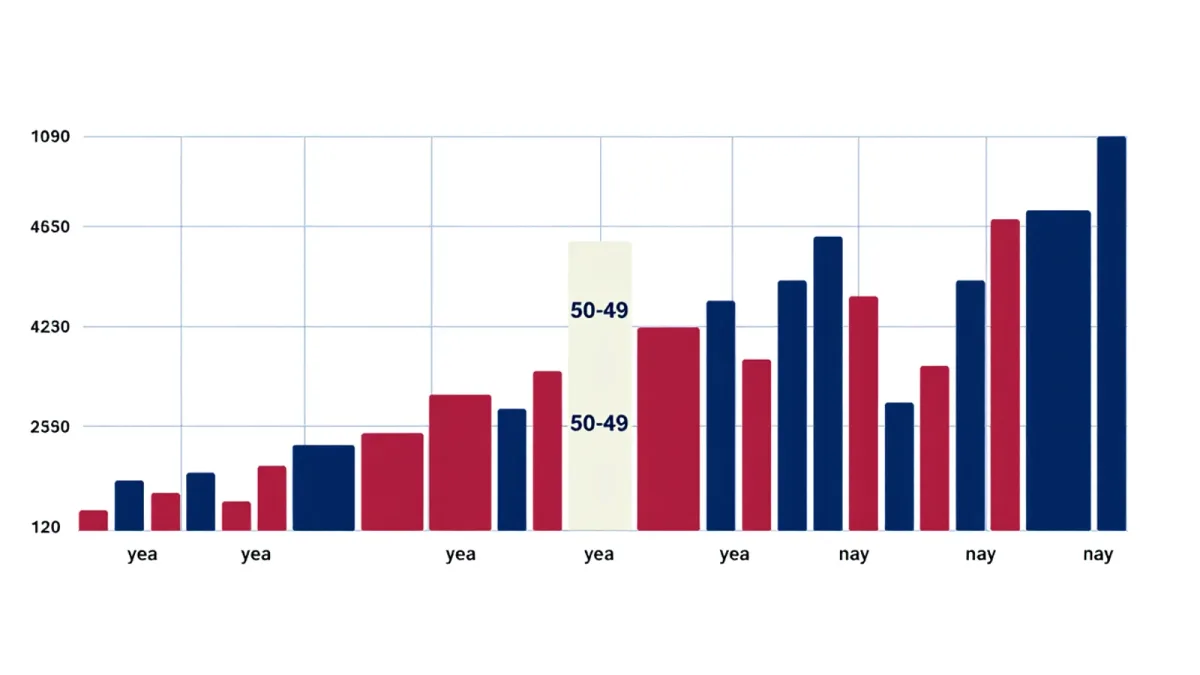
The Senate confirmed Senator Markwayne Mullin of Oklahoma as Secretary of Homeland Security on March 23, 2026, voting 54-45 on the nomination, per the Senate roll call record and DHS's announcement the next day. Mullin, a Republican who chaired the Senate Armed Services subcommittee on personnel, becomes the department's ninth Senate-confirmed secretary, succeeding Kristi Noem.
Who is taking over, and from what?
Mullin arrives from the Senate, where he served on Armed Services, Environment and Public Works, and Commerce committees — a portfolio that maps closely onto DHS's cyber, transport-security and grant programs. He takes a department of roughly a quarter-million employees that per Politico had been operating through a funding lapse affecting about 100,000 of them, alongside an immigration-enforcement buildout funded at record scale. Two Democrats joined all Republicans in support, per the roll call, giving the new secretary a modest bipartisan runway the department's last confirmations did not enjoy.
What does DHS look like on day one?
Three files dominate the handoff. First, the funding fight: the department has been among the agencies most exposed to the fiscal impasse, with TSA officers and border agents working without pay while Congress resolves fiscal year 2026 appropriations. Second, the enforcement expansion: Congress is simultaneously drafting reconciliation instructions worth tens of billions of dollars for ICE and Customs and Border Protection, money Mullin would administer. Third, continuity of the department's non-immigration missions — FEMA's disaster cycle, CISA's cyber directives and the Coast Guard — which agency veterans warn lose priority when political attention concentrates on the border.
Why does the confirmation matter beyond symbolism?
The secretary sets enforcement posture, grant formulas and the department's posture in litigation over federalized operations — the same authorities a federal court has been testing since late 2025, when the Supreme Court declined to let Texas Guard forces deploy in the Chicago area. Senate confirmation also matters operationally: an unconfirmed acting official has narrower legal footing for major orders, and Mullin's 54-45 margin signals that Senate scrutiny, not acting status, will frame his major decisions. Expect his first months to be measured in paychecks restored, detention capacity contracted and court orders obeyed or contested.
What does this change?
The vote converts a Senate ally into a cabinet principal with personal relationships across the aisle that his predecessors lacked — useful in a chamber currently drafting the department's biggest funding bill in years. It also removes one vote from the Republican conference for the duration of his term, a not-trivial margin in a Senate where budget votes have landed 50-48. Per DHS, Mullin takes office immediately. The confirmation-hearing record, not the press release, will define how he uses the mandate, and the first appropriations votes of the spring will test it.