The Government Accountability Office published its 2026 annual report on May 12, 2026, finding 610 unresolved matters left open from previous duplication reports and adding 97 new ones, with total potential financial benefits GAO now estimates at $132 billion to $159 billion. The report, GAO-26-108505, is the oversight agency's 16th annual accounting of federal programs that overlap, duplicate one another or fragment spending across agencies.
What does the report actually measure?
GAO's duplication reports catalogue places where federal programs do the same work twice, fund the same recipients through multiple channels, or scatter one mission across so many agencies that nobody owns the result. This year's edition groups the open matters into areas such as economic development, health care, information technology and disaster assistance. Per GAO, 24 of the open recommendations each carry potential financial benefits of $1 billion or more — the subset the agency flags for immediate congressional attention, since those few items account for most of the money on the table.
Why does the savings number keep rising?
The estimate grows each year because Congress rarely finishes the cleanup. Agencies implement some recommendations and reject others; Congress legislates on a handful; the remainder roll forward and compound. The 2026 report's $132 billion to $159 billion range is the largest GAO has published, and it is measured against the same baseline problem the first 2011 report identified: no statute requires agencies to act on GAO's findings, and appropriations committees rarely condition funding on implementation. The cumulative effect is a standing menu of offsets that both parties cite when arguing about deficits and neither converts into law at scale.
Which programs draw fire this year?
The report's recurring terrain is documented in GAO's prior editions: federal information-technology spending that agencies duplicate across departments, economic-development grants that reach the same regions through multiple agencies, and disaster-assistance programs so fragmented that homeowners navigating federal recovery can encounter separate schemes at four agencies with distinct eligibility rules. GAO has reported on those structures for years without closure, which is why they anchor the open-matter count in the 2026 edition; the 97 new matters extend the catalogue rather than replace it.
What does this change?
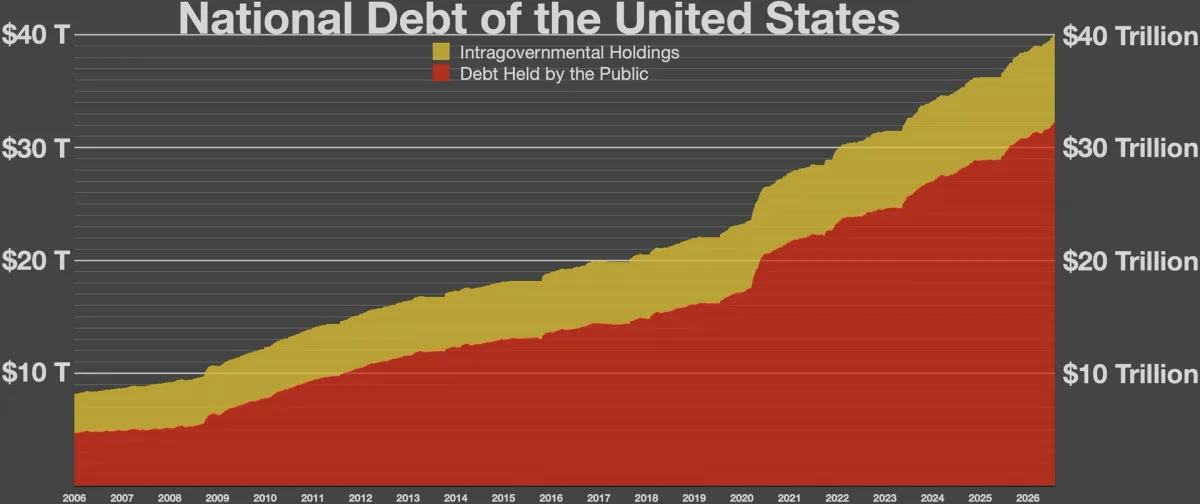
The report lands in a fiscal year where both chambers are drafting appropriations under pressure from a $2 trillion deficit, which historically is when duplication findings get their brief audience. The measurable test is the closure rate: GAO tracks how many of the 610 open matters agencies address before the 2027 report, and that rate has hovered near half over the past decade. Per GAO, even partial implementation of this year's flagged items would exceed the value of most single-program rescissions Congress debates. The report changes nothing by itself; it prices the option, as it has sixteen years running.