The Supreme Court on April 20, 2026 granted review in St. Mary Catholic Parish v. Roy, agreeing to decide whether Colorado violated the Free Exercise Clause when it excluded two Catholic preschools from the state's universal preschool program because the schools decline to admit children of same-sex parents. Per the Court's docket, the grant is limited to the petition's first two questions, with argument set for the court's next term.
Coverage here reports the litigation record; the site publishes information, not legal advice, and the merits remain to be argued and decided.
What is the dispute actually about?
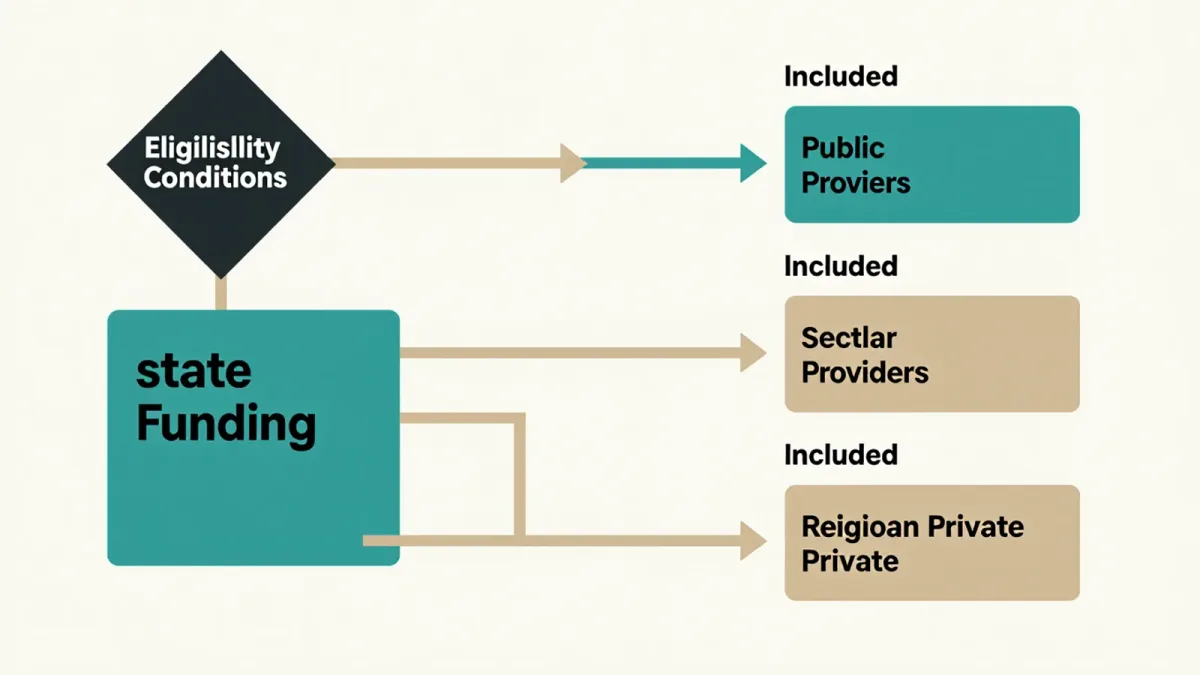
Colorado's universal preschool program, created by voters, pays tuition through mixed public and private providers — a structure that brought religious preschools in as participants. Two Catholic parishes in the Denver area joined the program but condition admissions on their religious standards, including a requirement that children's families conform to church teaching on marriage. The state said participating providers must admit children regardless of the parents' sexual orientation; the schools said that condition forced them to choose between their ministry and their faith. The Tenth Circuit ruled against the preschools on September 30, 2025, and they sought review.
Why does the grant's scope matter?
The Court declined to take the petition's invitation to reconsider Employment Division v. Smith, the 1990 decision holding that neutral, generally applicable laws do not receive strict scrutiny. The two accepted questions instead target whether Colorado's exclusion lacks general applicability — whether the state treats religious providers' conduct more harshly than comparable secular conduct. That narrower framing makes the case a sequel to the Court's recent religious-liberty line rather than a re-argument of its foundations, and it lowers the barrier to a decision that turns on Colorado's specific program rules.
Who is affected while the case is pending?
The Tenth Circuit's ruling stands in the meantime, so in Colorado the participating-parish preschools remain outside the program unless the state changes its conditions. Nationally, roughly a dozen states operate mixed public-private pre-K systems where the same church-state collision is available; several have pending disputes on hold pending the ruling. The Becket Fund represents the preschools, and Colorado's attorney general defends the program's anti-bias conditions, per filings in the case.
What does this change?
Argument is scheduled for November 3, 2026, meaning a decision lands mid-2027 — after the midterm elections have potentially reshaped state preschool boards and legislatures. The practical stakes run beyond preschool: the general-applicability question recurs wherever government funds private providers and attaches nondiscrimination conditions, from foster-care contracts to school-choice programs. A ruling for the preschools would force states to choose between secular-provider rules applied to all, and funding carve-outs for religious providers; a ruling for Colorado would confirm that publicly funded programs can carry uniform conduct conditions. Either way, the states funding services through religious institutions get the rulebook the Tenth Circuit could not give them.